Finding Pitches: The Make-or-Break Factor for Every Food Trucker
Location is arguably the most decisive factor in a food truck's success. A great product served in the wrong spot generates no revenue. The same product positioned in front of a regular, captive crowd can produce €500, €800 or even €1,000 in daily takings. Finding and securing good pitches is therefore a genuine commercial skill — not just a logistical detail.
This guide covers every available channel, the steps involved, and the mistakes to avoid when building a solid pitch calendar — especially for the busy summer season.
The 5 Main Categories of Pitches
1. Municipal Markets and Open-Air Markets
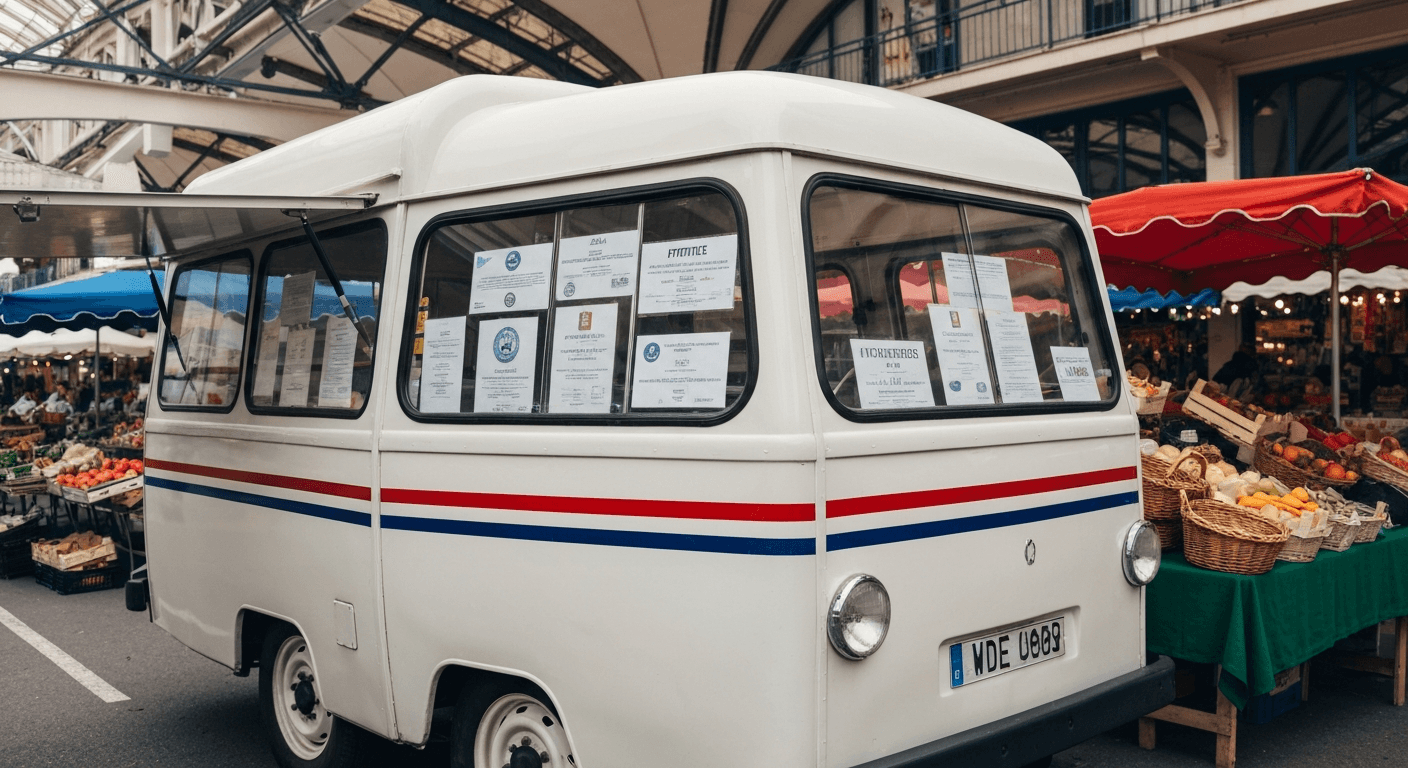
Weekly markets are the most stable pitches for a new food trucker. They offer a guaranteed footfall and the repetition needed to build a loyal customer base.
How to get a spot:
- Contact the market manager directly (usually the town hall or a municipal body)
- Ask to be added to the waiting list: spots at well-established markets are scarce
- Some councils run open calls for applications at the start of the year or when a vendor leaves
- Submit a written profile: cuisine type, photos of the truck, references if available
- Check that your activity is compatible with the market's internal rules (some ban fast food or require a minimum of local craft produce)
- Pitch fees range from €5 to €30 per linear metre depending on size and prestige
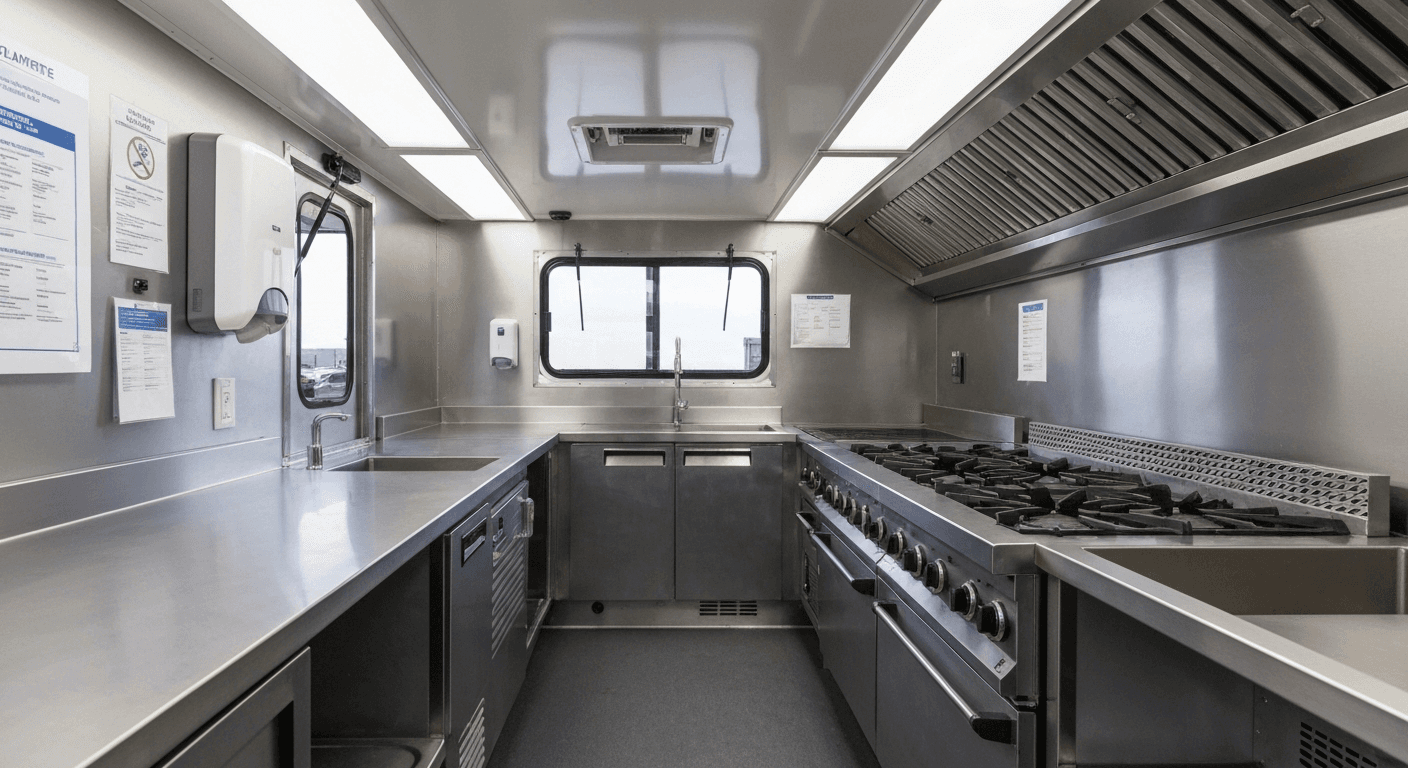
- Covered or indoor markets often have stricter hygiene requirements (extraction hood, ventilation)
2. Business Parks, Industrial Estates and Campuses
Weekday lunchtimes are often the peak revenue period for food trucks. Workers in suburban areas with limited restaurant options are an ideal target.
How to prospect:
- Identify industrial zones and business parks within a 30 km radius: most have a manager or syndic you can reach
- Send a prospecting email with photos, your menu and availability, then follow up by phone
- Large companies sometimes sign catering agreements with food truckers to feed their staff at lunch and in the evening
- University campuses are also an option (contact the student services office or facilities management)
3. Festivals, Christmas Markets and Seasonal Events
The high season (May to September) sees an explosion in events. Music festivals, large flea markets, food festivals, summer markets and local fairs all represent opportunities for high revenue over a short period.
How to apply:
- Monitor calls for applications on council websites, organisers' Facebook pages and food trucker groups
- Dedicated platforms: FoodTruckClub, FoodTruckRollCall, Maasai (varies by region)
- Build an attractive application file: photos of the truck in action, a menu tailored to the event, insurance certificate, company registration, HACCP training certificate
- Apply early: the best events receive dozens of applications from January onwards for the summer season
- Check participation fees: some events charge a high entry fee (€200–1,500) and/or a percentage of takings (typically 10–20%). Calculate your break-even before accepting.
- Find out how many catering stands are planned: 2 food trucks for 500 people is perfect; 15 for 2,000 is far more unpredictable.
- Insist on written confirmation covering hours, electricity supply, water access and waste rules.
4. Private Events (Weddings, Corporate Seminars, Private Parties)
The private events market is less visible but highly profitable: budgets are larger, the audience is captive and timings are fixed in advance. A wedding of 150 guests can generate €2,000–4,000 in a single evening.
How to develop this channel:
- Create a dedicated page on your website with clear event packages (price per head, service duration, what's included)
- List yourself on event supplier platforms: Mariages.net, La Mariée en Colère, WeddingWire, EventBrite Suppliers
- Contact local event agencies: they need original catering suppliers and do not always have food truckers in their address books
- Word of mouth works very well here: one impeccable wedding service often generates 2 or 3 new enquiries
5. Street Trading (Authorised Parking on the Public Highway)
In some towns, it is possible to obtain a temporary authorisation to occupy public land (AOT — Autorisation d'Occupation Temporaire) and park on a public street. This is the most flexible option but also the most regulated.
Process:
- Submit a written request to the town hall (planning or highways department), specifying the exact location, requested days and hours, and duration
- The council assesses compatibility with traffic flow, neighbouring businesses and local rules
- An AOT is never permanent: it is renewable and can be withdrawn
Managing and Optimising Your Pitch Calendar
Diversify to Protect Yourself
Never depend on a single pitch. A cancelled market, a company relocation, a festival that disappears — and your calendar collapses. Aim for a mix of:
- 2 or 3 regular pitches (markets, business parks) providing a baseline revenue floor
- 1 to 2 one-off events per month for revenue peaks
- 1 or 2 private event slots per month during high season
Analyse the Profitability of Each Pitch
Not all pitches are equal. A market generating €300 in takings over 6 hours plus 2 hours of travel is less profitable than a business park generating €400 in 2 hours.
With FoodTracks, you can track your revenue per service through the SumUp till integration, and quickly identify which pitches are worth renewing — and which to drop.
Keep a Forward-Looking Calendar
As soon as an event ends, follow up with the organiser about the following year. The best slots are snapped up in November and December for the next season. A simple email at the right moment can secure your place before official recruitment even opens.
Conclusion
Finding profitable pitches is a genuine commercial activity that demands method, persistence and follow-through. Start with local markets to build your reputation, then work up to larger events and private catering. Analyse the true profitability of each pitch — revenue, service duration, access costs — to sharpen your calendar season by season. A well-positioned food truck is often more decisive than an exceptional menu.
Frequently Asked Questions
- How do I get a market pitch for my food truck?
- Contact the market manager directly (town hall or municipal body) to ask to be added to the waiting list. Prepare a file with photos of your truck, cuisine type, insurance certificate and company registration. Some councils publish open calls at the start of the year. Patience is often required: the best spots fill quickly and renewals take priority.
- Can a food truck park anywhere freely?
- No. Selling from a vehicle on a public street is regulated and requires a temporary public land occupation authorisation (AOT) issued by the local council. Trading without authorisation risks a fine and immediate removal. Some cities have dedicated food truck zones with rotation or tender schemes — check with your local authority.
- How do I get into a festival with my food truck?
- Monitor calls for applications on organiser websites, food trucker Facebook groups and platforms such as FoodTruckClub. Prepare a complete application file (photos, menu, HACCP, insurance, company registration) and apply early — often from November or January for the summer season. Check participation fees and the number of catering stands before accepting.
- How do I find corporate catering contracts?
- Identify business parks and industrial estates in your area, find the syndic or park manager's contact details, and send a prospecting email with photos and availability. Offer 2 or 3 free or discounted trial lunchtimes before proposing a regular contract. Large companies can sign formal catering agreements — contact their facilities or HR department.
- What is the best pitch for a beginner food trucker?
- For a beginner, local weekly markets are ideal: regular customer flow, a reputation that builds week after week, and low financial risk. Once your cuisine is refined and your reputation established, you can target business parks for weekday lunches and summer festivals for revenue peaks. Avoid investing in high-fee events before testing your concept on a regular audience.