Mandatory Training to Open a Food Truck in France
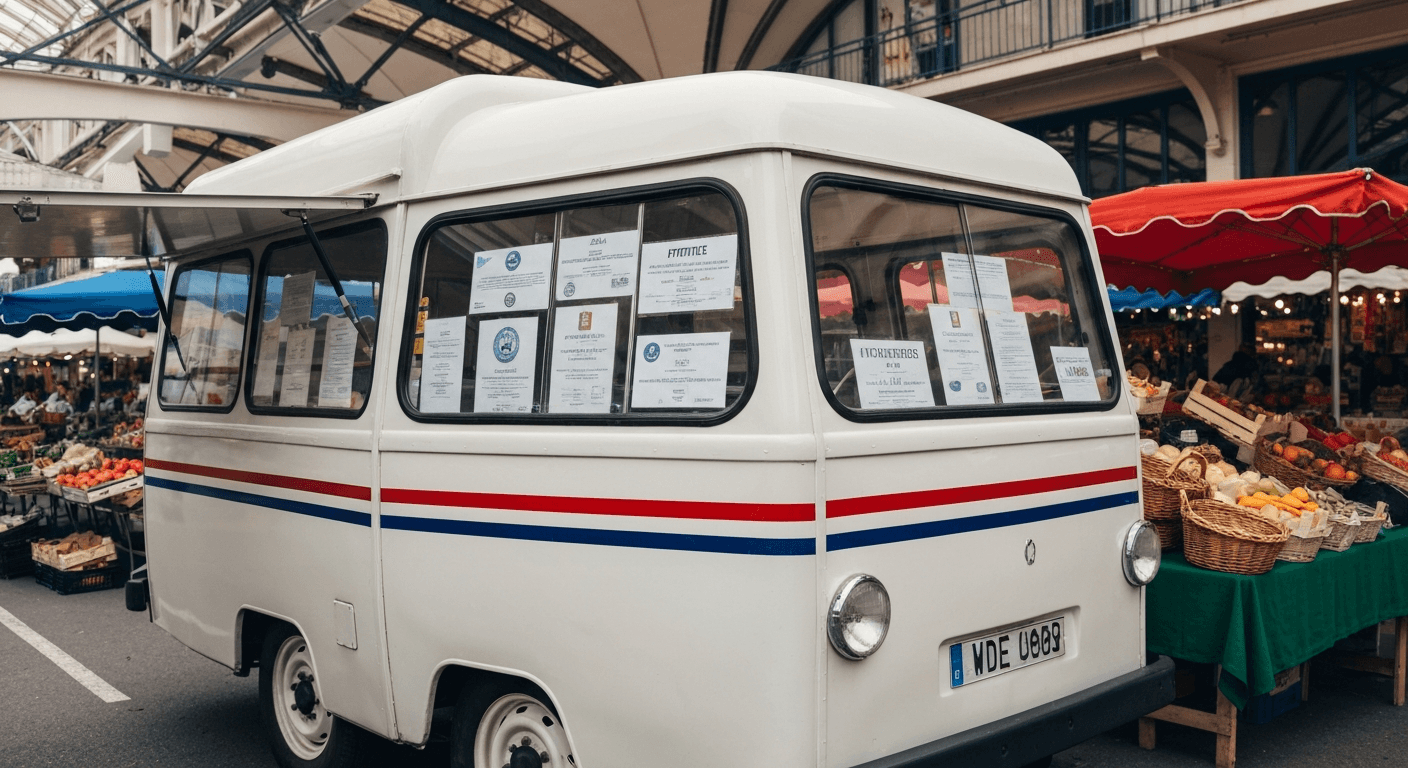
Opening a food truck is not something you improvise. Beyond the concept and the vehicle, there is a core set of legally required qualifications and certifications without which you cannot operate legally. In 2026, inspections have intensified: prefectures, DDPP (Departmental Directorates for the Protection of Populations), and local authorities increasingly check the credentials of mobile food operators.
This guide details everything you need to complete before your first service, including costs, durations, and the relevant bodies.
1. Food Hygiene Training (HACCP): The Only Truly Mandatory Qualification
What the Law Says
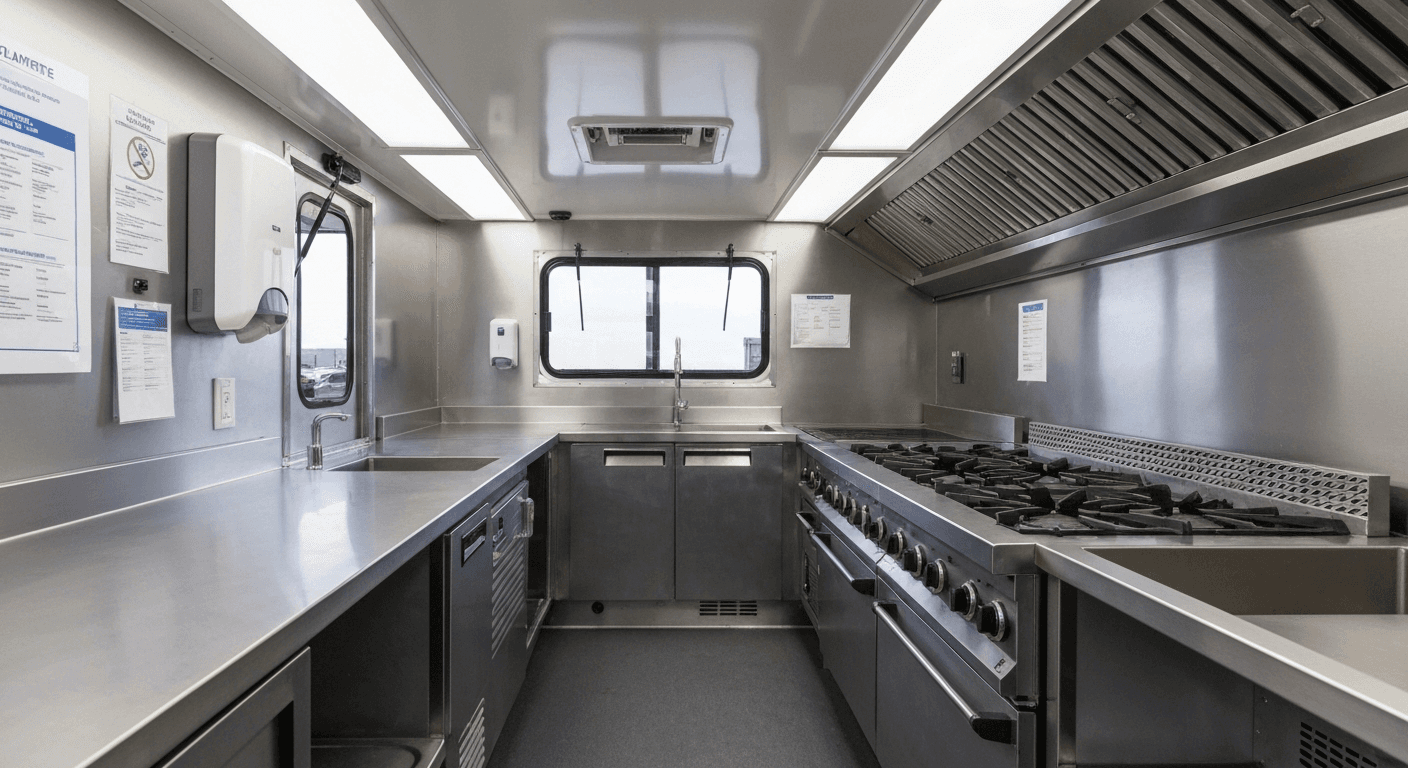
Since 1 October 2012, the law requires every commercial catering establishment — including food trucks, pizza trucks, and other mobile food vendors — to have at least one person trained in food hygiene on the team. This requirement stems from European Regulation CE 852/2004 and the ministerial order of 5 October 2011.
The official framework is the HACCP method (Hazard Analysis and Critical Control Points), which gives you the tools to identify and control contamination risks at every stage of your operation.
What the Training Covers
Training lasts a minimum of 14 hours (2 days) and covers:
- Key principles of European and French food safety regulations
- Biological, chemical, and physical hazards
- The HACCP method and its 7 principles
- Personnel and premises hygiene
- The cold chain and storage temperatures
- Traceability and mandatory record-keeping
- Waste management
Cost and Funding
| Format | Indicative price | Duration | |---|---|---| | In-person (approved training center) | €200 – €400 | 2 days (14h) | | Online (e-learning) | €100 – €250 | 14h at your own pace | | In-house training | On request | Flexible |
Good news: This training is eligible for the CPF (Personal Training Account). If you have available rights, you can fund it fully or partially via moncompteformation.gouv.fr. Self-employed workers can also contact AGEFICE or FAF PM depending on their status.
Where to Train
- CCI Formation (Chambers of Commerce and Industry): approved training throughout France
- IFFSA (Institut de Formation de la Food Service Academy)
- Approved regional training centers (list available on your regional DRAAF website)
- Certified e-learning platforms: Datadock, Qualiopi
2. The Business Start-Up Course (SPI): For Tradespeople Without a Qualification
Who Is Concerned?
If you register as a craftsperson (which applies to most food truckers who cook their own food), you must demonstrate a professional qualification in the catering trade. In practice:
- You hold a CAP, BEP, or Bac Pro in cooking or catering → you are exempt from the SPI
- You have 3 years of professional experience in the sector → you may be exempt
- Neither of the above → the SPI is mandatory before registration
What the SPI Involves
The Business Start-Up Course (Stage de Préparation à l'Installation) is run by the Chamber of Trades and Crafts (CMA) in your department. It lasts 5 days (30 hours) and covers:
- Accounting and financial management for a craft business
- The legal and tax framework
- Social aspects (contributions, social protection)
- Customer relations and business development
3. The Appropriate Driver's License
Class B or Class C?
The type of license required depends on the GVW (Gross Vehicle Weight) of your food truck:
| Vehicle GVW | License required | Example vehicles | |---|---|---| | ≤ 3.5 tonnes | Class B (car license) | Renault Master, Mercedes Sprinter, Ford Transit | | > 3.5t and ≤ 7.5t | Class C1 | Light trucks, some food trucks on carrier chassis | | > 7.5 tonnes | Class C (HGV license) | Large trucks, semi-trailers |
The vast majority of food trucks in France are fitted out on vans under 3.5 tonnes and therefore only require a Class B license. However, some trucks on carrier chassis (extended kitchen, heavy equipment) may exceed this threshold.
Tip: Before purchasing your vehicle, always check the GVW in the manufacturer's documents. A "loaded" food truck (stock, equipment, wastewater) can weigh significantly more than its empty weight.
4. Other Recommended Training (Not Mandatory, But Essential)
First Aid Training (PSC1)
Not mandatory but strongly recommended, especially if you work alone or with staff. In the event of an accident at your location (burn, serious cut, customer collapse), knowing first aid could save a life.
Duration: 7 hours | Cost: €50 – €80 | Providers: Red Cross, Civil Protection, SAMU Social
Fire Safety Training
Your food truck is equipped with gas cylinders and/or fryers. The fire risk is real. Training on extinguishers and evacuation is strongly advised.
Duration: 3 – 4 hours | Cost: €80 – €150 | Providers: INRS-approved safety training centers
5. Related Administrative Obligations
Training alone is not enough: you must also complete several administrative steps before opening.
Business Registration
Depending on your legal structure:
- Sole trader / micro-entrepreneur → online registration at autoentrepreneur.urssaf.fr
- Craftsperson → registration in the National Business Register (RNE) via the CMA
- Company (SARL, SAS) → registration via the business formalities single window
Declaration to the DDPP
Every catering establishment must file an activity declaration with the Departmental Directorate for the Protection of Populations (DDPP) in its department, at least 1 month before opening.
Professional Liability Insurance
It is not a qualification, but it is mandatory: professional liability insurance (RC Pro) covers damage you may cause to third parties (food poisoning, accident at your location). Budget €500 to €1,500 per year depending on coverage.
6. How FoodTracks Helps You Apply the Rules Daily
Being trained is good. Applying the rules every day is better. That's where a tool like FoodTracks comes in.
Stock Traceability
HACCP rules require rigorous traceability of your products: where they come from, when they were received, at what temperature they were stored. FoodTracks centralizes this information automatically via supplier invoice scanning and real-time stock tracking.
Expiry Date and Temperature Monitoring
The cold chain is a critical control point in the HACCP plan. FoodTracks sends you automatic alerts when a product approaches its use-by date (DLC or DDM), allowing you to act before the product becomes a risk.
Handling Non-Conformities
In the event of an unannounced DDPP inspection, you must be able to present your HACCP records. With FoodTracks, the complete history of your stock, orders, and sales is available in a few clicks.
Summary Checklist: Training and Compliance to Open a Food Truck
- [ ] HACCP food hygiene training (14h, Qualiopi-approved provider) — mandatory
- [ ] SPI at the CMA (5 days, 30h) — mandatory if no catering qualification or experience
- [ ] Appropriate driver's license (B if ≤ 3.5t, C if > 3.5t)
- [ ] Business registration (URSSAF, CMA or RCS depending on structure)
- [ ] DDPP declaration at least 1 month before opening
- [ ] Professional liability insurance taken out
- [ ] Gas equipment inspection certificate if on-board gas appliances
- [ ] First aid training PSC1 (recommended)
- [ ] Fire safety training (recommended)
Conclusion
Opening a food truck legally in 2026 requires ticking several mandatory boxes, but none of them are insurmountable. Food hygiene (HACCP) training (14 hours) is the only universal legal prerequisite — it is accessible, fundable via the CPF, and completed in 2 days. The rest (SPI, license, registration) is simply a matter of organization.
Once up and running, FoodTracks helps you apply HACCP rules every day: stock traceability, expiry alerts, supplier tracking — everything you need to pass a health inspection without stress.
Discover FoodTracks for free →
Also read: Food Truck Regulations in France: The Complete Guide · Hygiene and HACCP for Food Trucks · Opening a Food Truck: The Complete Guide
Frequently Asked Questions
- What training is mandatory to open a food truck in France?
- Food hygiene training (HACCP, 14 hours) is the only legally mandatory training for any commercial food business, including food trucks. Additionally, the business start-up course (SPI) at the Chamber of Trades is required for tradespeople without a catering qualification. The appropriate driver's license for the vehicle's weight is also essential.
- How much does food hygiene training cost for a food truck?
- HACCP food hygiene training for food trucks generally costs between €200 and €400 for 14 hours of training. Organizations such as IFFSA, CCI Formation, or approved regional centers offer this training in person or online. It can be partially funded through the CPF (Personal Training Account) or AGEFICE for self-employed individuals.
- Do you need a heavy goods vehicle license to drive a food truck?
- It depends on the GVW (Gross Vehicle Weight) of your vehicle. If the GVW is 3.5 tonnes or less, a standard Class B (car) license is sufficient. Above 3.5 tonnes, a Class C (HGV) license is required. The majority of food trucks on vans (such as Renault Master or Mercedes Sprinter) remain under 3.5 tonnes and only require a Class B license.
- Is a catering qualification (CAP) required to open a food truck?
- No, a catering qualification (CAP) is not required to open a food truck. However, if you have no catering diploma or professional experience in the sector, you must complete the 5-day business start-up course (SPI) at the Chamber of Trades before registering your craft business. The SPI covers management, accounting, and the legal framework.
- What documents are mandatory to open a food truck?
- To legally open a food truck, you need: (1) a SIRET number (registration with URSSAF or the Chamber of Trades), (2) a food hygiene (HACCP) training certificate, (3) professional liability insurance, (4) a gas equipment inspection certificate if you use gas appliances, (5) the appropriate driver's license, and (6) a temporary occupancy permit (AOT) or market authorization for each location.