Why So Many Food Trucks Close in Their First Year
Launching a food truck sounds like a dream. Freedom, direct customer contact, culinary creativity… The reality is often harsher: industry estimates suggest nearly 60% of food trucks close or are sold within the first 3 years. Most of these failures aren't due to a lack of culinary talent — but to avoidable management mistakes.
Here are the 10 mistakes almost every beginner makes, and how to fix them before they cost too much.
Mistake 1: Setting Prices Without Calculating Food Cost
This is the number one mistake. Many food truck operators set their prices "by instinct" or by copying competitors, without knowing what each dish actually costs to make.
The problem: if your food cost exceeds 30 to 35% of your selling price, your margins evaporate. A burger sold for $10 that costs $4 to produce leaves you only $6 to cover fuel, pitch fees, wages, and your own salary.
The solution: calculate your cost price for each recipe before opening. List every ingredient with its price per gram, add them up, then apply a multiplier of 3 to 3.5 to get a viable selling price. Revisit this calculation every time a supplier changes their prices.
Mistake 2: Choosing Your First Location Without Testing It
The "perfect" location in theory can disappoint in practice. Many beginners sign an annual pitch contract without testing the spot across different days, weather conditions, or seasons.
The problem: a corporate car park might generate great traffic on Tuesday lunchtimes but be a ghost town on Wednesdays. A summer market can lose 70% of its footfall from October onwards.
The solution: before committing, go observe the location as a potential customer at different times of day. Talk to other traders already there. Negotiate a one-month trial before making any long-term commitment. Read our guide on how to choose a profitable location.
Mistake 3: Offering a Menu That's Too Large
A 25-dish menu might seem appealing for covering all tastes. In reality, it complicates sourcing, slows down service, and dilutes your identity.
The problem: the wider your menu, the more ingredients you need to manage, the more waste you generate, and the slower your service becomes. A customer waiting 20 minutes will often leave without ordering.
The solution: start with 5 to 8 dishes maximum. Master them perfectly. A food truck known for "the best tacos in town" will always out-earn a generalist van. Once your sales volume is stable, you can gradually expand the menu.
Mistake 4: Underestimating Fixed Costs
A food truck has no rent — but its fixed costs are very real. Vehicle finance, insurance, mechanical maintenance, pitch fees, software subscriptions, accounting… It all adds up.
The problem: beginner food truckers don't draw up a complete list of their costs before launching. The result: they realise midway through that their break-even point is much higher than expected.
The solution: before opening, list absolutely every monthly cost, even the small ones. Calculate how many dishes you need to sell per service to cover that amount — that's your break-even point. FoodTracks generates this calculation automatically from your real data, no complex spreadsheet required.
Mistake 5: Neglecting Inventory Management
"I think I've got everything I need" is not an inventory management method. Without precise tracking, you'll swing between overstocking (waste) and stockouts (lost sales).
The problem: in a food truck, you don't have room to over-stock. And fresh produce doesn't wait.
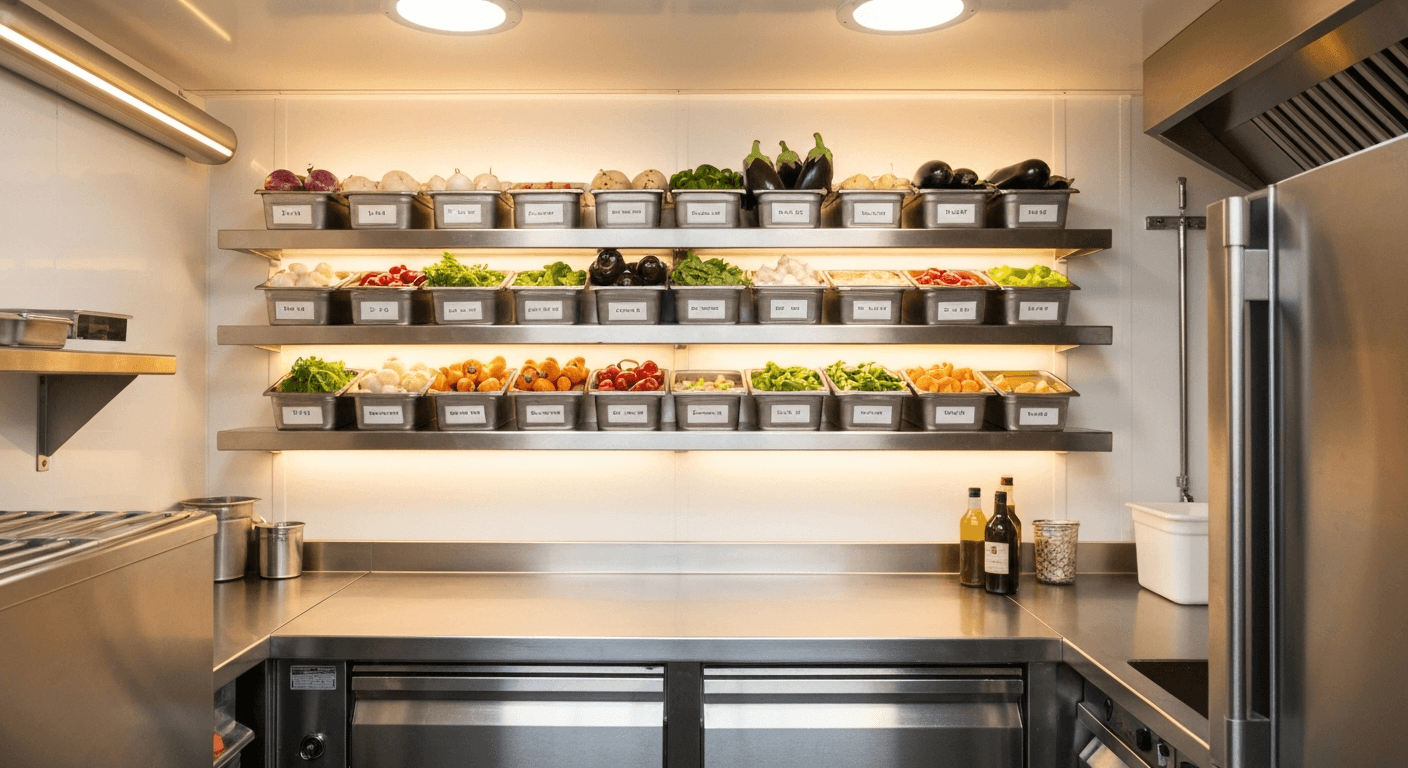
The solution: systematically note what you use and what you throw away after each service. Within a few weeks, you'll have a reliable baseline for refining your orders. FoodTracks automates this tracking via supplier invoice scanning and sales analysis.
Mistake 6: Ignoring the Regulations
Parking permits, food hygiene certification, local authority declarations, professional insurance… The regulations around food trucks are more extensive than most beginners expect.
The problem: a violation can result in a fine, suspension of activity, or worse. Some operators discover too late that they're operating without the right authorisations on certain pitches.
The solution: first, consult our guide on food truck regulations. Check with local authorities for each location you're targeting, and make sure you're covered by appropriate insurance.
Mistake 7: Neglecting Marketing From Day One
"Quality will be enough to bring people in." That's wrong — especially in the first few months, when nobody knows you yet.
The problem: without an online presence and a strategy for letting people know where you are, you'll spend entire services waiting for customers who never come.
The solution: set up your Google My Business listing on day one. Open an Instagram or Facebook account and post your location every morning before service. The tools are free — it's 15 minutes a day that make the difference. For more depth, read our guide on food truck digital marketing.
Mistake 8: Not Building a Cash Reserve
In the early months, income is irregular. A fridge breakdown, a service cancelled due to bad weather, a delayed supplier delivery… Unexpected events are part of daily life.
The problem: many beginners invest all their capital in the vehicle and equipment, without keeping a reserve. At the first unexpected expense, they find themselves short of cash.
The solution: keep the equivalent of 3 months' fixed costs in reserve before launching. And track your cash flow week by week — not once a quarter when your accountant sends the accounts.
Mistake 9: Going Solo With No Backup Plan
In a one-person food truck, you're the chef, cashier, delivery driver, accountant, and social media manager. That's manageable at launch — but fragile.
The problem: a bout of illness, a family emergency, or simply an exhausting day can bring your service to a halt. Without a plan B, you lose revenue and customers.
The solution: train one or two people you trust in the basics of your operation. Identify a freelancer or casual worker who can step in. And automate everything that can be automated: supplier orders, sales tracking, maintenance reminders.
Mistake 10: Not Analysing Your Data
After 6 months of trading, most beginner food truckers don't know which dishes are most profitable, which locations perform best, or which days are their quietest.
The problem: without data, you're flying blind. You repeat the same decisions — good or bad — out of habit rather than reasoning.
The solution: even without sophisticated software, keep a weekly log of your sales, costs, and locations. With a tool like FoodTracks, all this data is centralised and analysed automatically. You can see at a glance which services are profitable and which need rethinking.
Conclusion: Beginner Mistakes Are Avoidable
Running a food truck is a demanding trade, but its main causes of failure are predictable — and therefore avoidable. Calculating prices properly, testing locations, managing stock, controlling cash flow, and analysing data: these are professional reflexes that need to be built from day one.
FoodTracks was designed precisely for this: giving you the tools of a professional manager without the complexity of an ERP. 14-day free Pro trial, no credit card required.
Frequently Asked Questions
- What are the most common mistakes when opening a food truck?
- The most common mistakes are: setting prices without calculating food cost, choosing a location without testing it, offering too wide a menu, underestimating fixed costs, and neglecting inventory management. These mistakes are all avoidable with thorough preparation.
- How much cash reserve do you need to launch a food truck?
- It's recommended to keep the equivalent of 3 months of fixed costs in reserve before opening. In practice, this represents between €5,000 and €15,000 depending on the size of your operation and pitch costs.
- How many dishes should a beginner food truck menu have?
- For a beginner, a menu of 5 to 8 dishes is ideal. This simplifies sourcing, reduces waste, speeds up service, and allows you to build a strong identity. You can expand the menu once your business is stable.
- How do you test a location before committing to it?
- Visit the location as a potential customer at different times of day and week. Talk to traders already operating there. Negotiate a one-month trial period with the landowner or local authority before any annual commitment.
- Do you need management software from the very start of your food truck?
- Not necessarily on day one, but very quickly. Without tracking sales and stock, you're making decisions blind. A tool like FoodTracks costs under €10/month and prevents mistakes that can represent 20 to 30% losses on your margins.