Food Trucks in 2026: A Sector in Full Transformation
The street food market has undergone a radical transformation in recent years. In 2026, the food truckers who stand out are no longer just the best cooks — they're the ones who combine culinary excellence with data-driven management. Here's a rundown of the trends you can't afford to miss.
1. End-to-End Digitalization
Gone are the days of paper notebooks and mental math at the end of a shift. In 2026, the highest-performing food trucks centralize all their data in a single tool: SumUp sales, inventory, expenses, and footfall predictions.
Solutions like FoodTracks connect your payment terminal to real-time inventory management. Result: you know exactly what you earned, what you spent, and what you need to order before you even close up.
What changes in practice:
- Automated ordering based on sales history per location
- Expiry alerts for zero waste
- Tax reports generated in one click for your accountant
2. Local Sourcing as a Commercial Argument
2026 customers don't just want to eat well — they want to know where their food comes from. Local sourcing has become a real differentiator, not just for vegan or organic food trucks.
How to capitalize on it:
- Clearly display your local suppliers on your board (physical or digital)
- Mention the origin of your key ingredients on social media
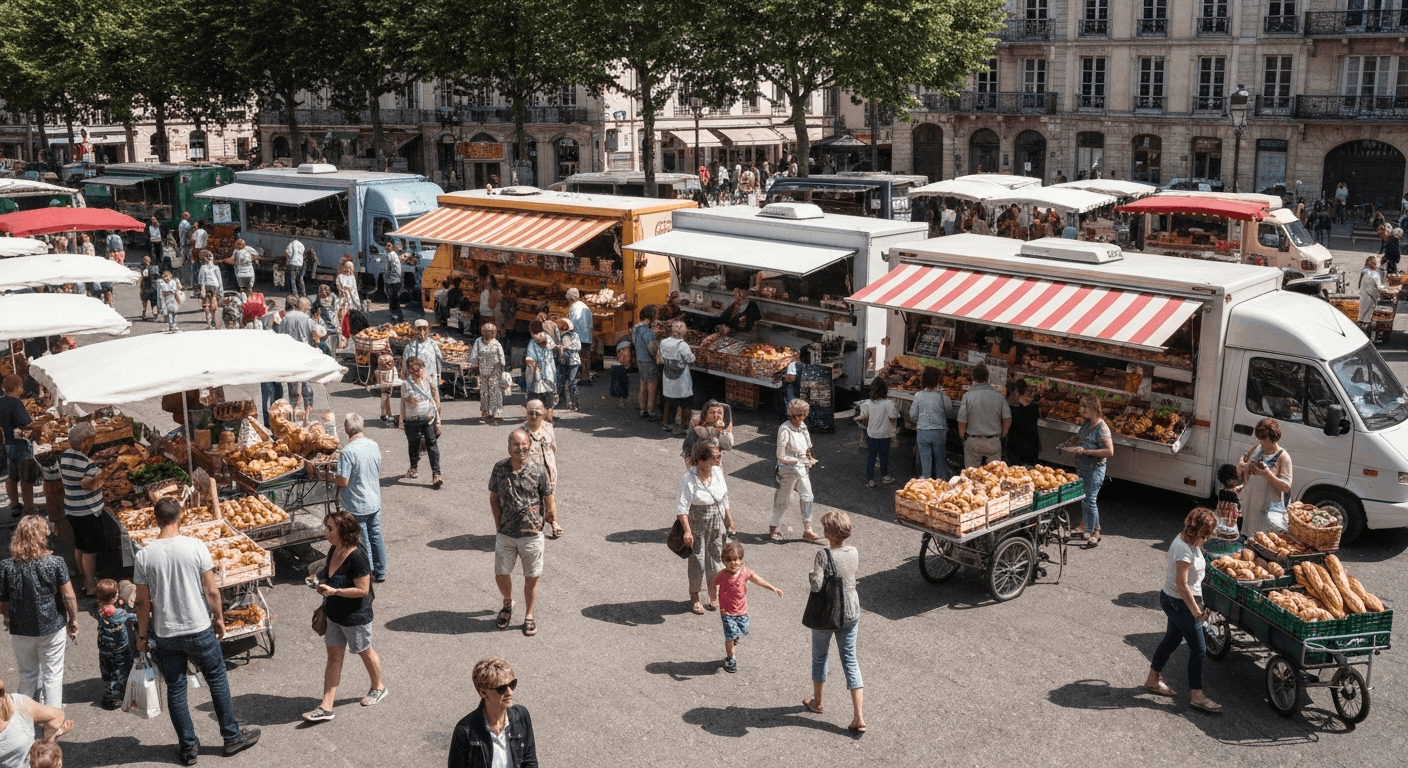
- Participate in farmers' markets to build direct supplier relationships
3. The Rise of Hybrid Models
The pure food truck model is no longer the only viable approach. In 2026, smart hybrids are emerging:
Food truck + dark kitchen
Prepare your bases in a dark kitchen overnight, sell from the truck at lunch. Multiply your service windows without multiplying your costs.Food truck + click & collect
Pre-order slots via a simple form or app. Less waste, better visibility on production. Works very well at recurring spots (companies, weekly markets).Food truck + event catering
Every other weekend at a festival or wedding, the rest of the week on regular rounds. Event margins (40–60%) compensate for slow days.4. Artificial Intelligence in Daily Management
AI is no longer reserved for large chains. In 2026, independent food truckers have access to tools that:
- Predict demand based on weather, local events, and your history
- Optimize your locations by analyzing foot traffic
- Detect stock anomalies (a product selling slower than usual = alert)
5. New Customer Expectations: Speed and Personalization
The food truck experience has become more professional. Customers now expect:
Speed without compromising quality
Under 5 minutes wait time has become the standard. Food truckers who achieve this invest in prep work, recipe standardization, and checkout flow management.Customizable options
Vegan, gluten-free, dairy-free, low-calorie: customers want to customize their orders. Food trucks offering at least 2 options per dietary restriction expand their target audience by 30%.Frictionless payment
Credit card, contactless, QR code: cash represents less than 15% of transactions in urban areas in 2026. If you don't have a high-performing payment terminal connected to your management system, this is urgent.6. Regulations: What's Changing in 2026
The legal framework for food trucks continues to evolve. Key points to watch:
- Reserved parking zones: more and more cities are creating dedicated spots with annual tender processes. Prepare your application in advance.
- Digital allergen labeling: dematerialized display (QR code on the menu) is now accepted in most jurisdictions.
- Digitized HACCP: some health inspections now accept digital temperature and cleaning logs. Check with your local health authority.
Key Takeaways
The 2026 food truck is a data-driven business. Margins are won through inventory optimization, demand forecasting, and customer loyalty — not just product quality.
The tools exist, they're accessible and affordable. The difference between a growing food truck and a stagnating one often comes down to the ability to measure, analyze, and adjust.
Start with one thing: connect your SumUp till to FoodTracks and watch your sales data by location for 4 weeks. You'll already be ahead of 80% of your competitors.
---
Also read: Optimize Your Food Truck Routes · Food Truck AI Sales Prediction · Food Truck KPI Dashboard
Frequently Asked Questions
- What are the main food truck trends in 2026?
- The major trends are: full management digitalization (inventory, sales, AI predictions), local sourcing as a commercial argument, the hybrid food truck + dark kitchen model, and frictionless payment integration.
- How can AI help a food truck in 2026?
- AI can predict demand based on weather and local events, optimize locations based on foot traffic analysis, and detect stock anomalies before they become costly. Tools like FoodTracks integrate these features directly into the dashboard.
- Is the dark kitchen model compatible with a food truck?
- Yes, many food truckers use a dark kitchen to prepare their bases overnight and sell from the truck at lunch. This hybrid model allows multiplying service windows without doubling costs, and enables delivery via platforms like Uber Eats.
- What management tools should a food truck use in 2026?
- A high-performing food truck in 2026 should at minimum have: a connected payment terminal (e.g., SumUp), inventory management software with expiry alerts, a sales prediction tool by location, and a centralized dashboard. FoodTracks combines all these elements in a single platform.