Food Waste: The Silent Margin Killer in Food Trucks
Food waste is the problem every food trucker knows but few actually measure. On average, a food truck throws away 15 to 25% of its raw materials each week. Over a year, that is EUR6,000 to EUR10,000 going straight in the bin.
The good news? With the right strategies, you can cut that waste by 40% or more, while also improving customer satisfaction.
Understanding the Sources of Waste
1. Overproduction: The "Just in Case" Trap
The number one cause of food truck waste is overproduction. Without reliable data, the temptation is to prepare too much "just to be safe." The result:
- Portions prepared but never sold
- Prepped ingredients that do not keep
- Sauces and sides tossed at the end of service
2. Poor Stock Management
A disorganized fridge, products without visible reception dates, orders placed "by feel" — all factors that generate structural waste.
3. Preparation Losses
Excessive peeling, poorly calibrated portions, recipe errors — preparation is an often underestimated source of loss.
7 Strategies to Reduce Waste
Strategy 1: Measure Before You Act
You cannot improve what you do not measure. For one week, systematically record:
- What you throw away at the end of each service (by weight or euros)
- The reasons for waste (overproduction, expiration, preparation)
- Which products are most affected
Strategy 2: Use AI Prediction for Your Preparations
Technology is your best ally against waste. A tool like FoodTracks analyzes your past sales, weather, and location type to predict how many portions to prepare.
Instead of making 80 burgers "just in case," the AI tells you: "For this market, on a sunny Tuesday, plan 52 to 58 burgers." Accuracy improves over time as the algorithm learns your patterns.
Strategy 3: Adopt Staged Preparation
Instead of preparing everything before service, break your prep into stages:
- Before service: prepare 60% of your estimate
- After 1 hour of service: assess demand and prepare the remainder
- Last hour: only cook to order for longer dishes
Strategy 4: Design an Anti-Waste Menu
Design your menu so that ingredients overlap between dishes:
- Wrap chicken can become salad topping
- Vegetables of the day work in both soup AND as a side
- Leftover bread becomes croutons or French toast
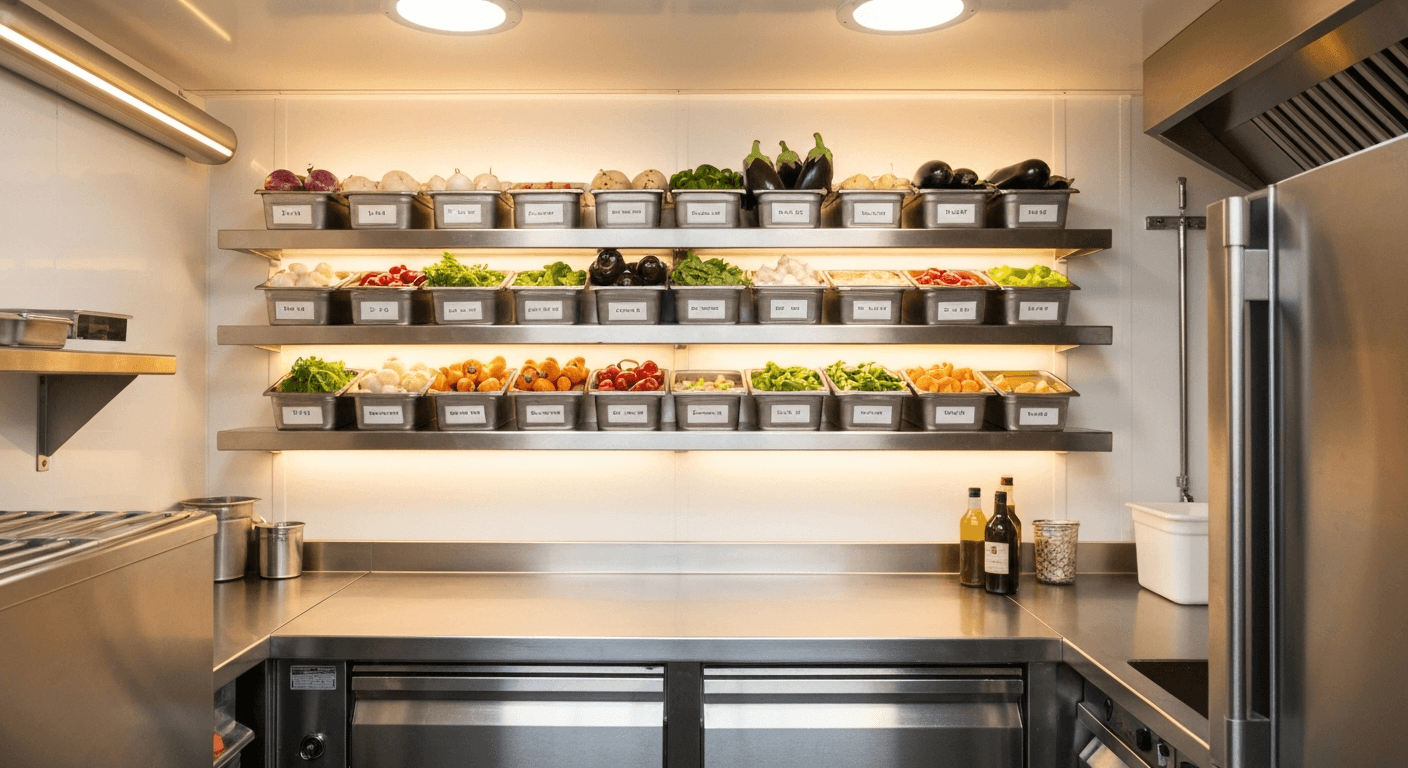
Strategy 5: Apply FIFO Rigorously
FIFO (First In, First Out) is the foundation of anti-waste management:
- Label every product with its reception date
- Place new deliveries behind older stock
- Check dates every morning before service
- Use FoodTracks automatic expiration alerts
Strategy 6: Negotiate More Frequent Deliveries
Rather than ordering in bulk once a week, prefer more frequent deliveries in smaller quantities. Yes, the unit price may be slightly higher, but savings on waste more than compensate.
Strategy 7: Monetize Your Surplus
When waste is unavoidable, turn it into an opportunity:
- Too Good To Go: sell unsold items at a discount at end of service
- Flash promotions: -30% on final portions via your social media
- Donations: give to charities and benefit from a tax advantage
- Composting: organic waste can become compost for local gardens
Measuring Your Progress
Track these metrics weekly:
- Waste rate: weight discarded / weight purchased (target: under 5%)
- Cost of waste: in euros, per service
- Stockout-to-waste ratio: the balance between too much and not enough
Concrete Results
Food truckers who apply these strategies typically see:
- 35 to 45% less waste from the first month
- 5 to 8% higher gross margin thanks to savings
- Less stress: you know exactly what to prepare and in what quantity
- Better quality: less stock stored = more freshness
Conclusion
Reducing waste in a food truck is not just about ecology — it is a major profitability lever. Every euro of waste avoided is an extra euro of margin.
With tools like FoodTracks, AI prediction and automated tracking make this optimization accessible to everyone, without extra daily effort.
Frequently Asked Questions
- How to reduce waste in a food truck?
- The 3 main levers are: using AI prediction to adjust preparations, adopting staged preparation (60% before service, top-up during), and designing a menu where ingredients overlap between dishes. With these methods, reduction reaches 35 to 45%.
- How much does food waste cost a food truck?
- On average, a food truck loses EUR6,000 to EUR10,000 per year due to food waste, representing 15 to 25% of raw material costs. Overproduction and poor stock management are the two main causes.
- What tools can reduce food truck waste?
- FoodTracks combines AI sales prediction, automatic stock tracking, and expiration alerts to reduce waste by 35 to 45%. The Too Good To Go app also helps monetize unsold items at the end of service.