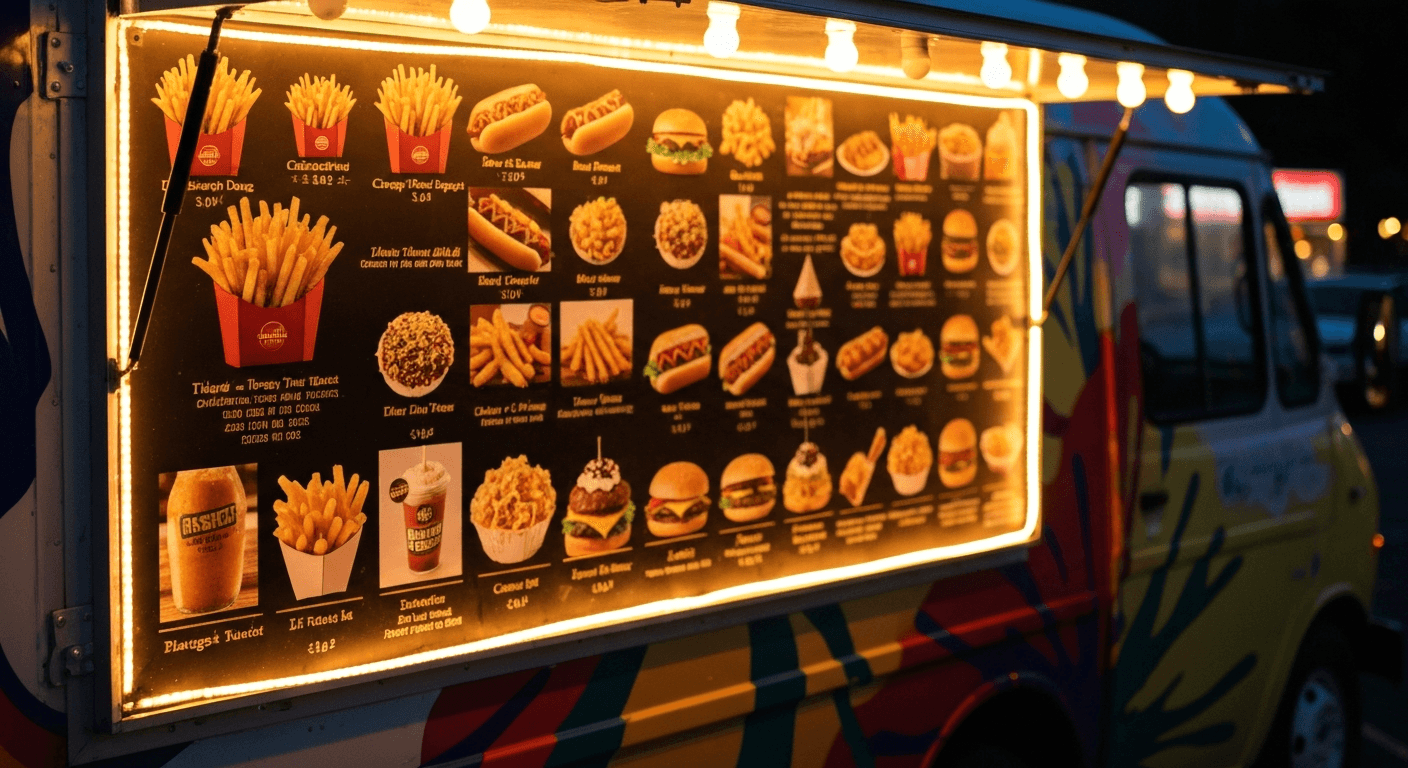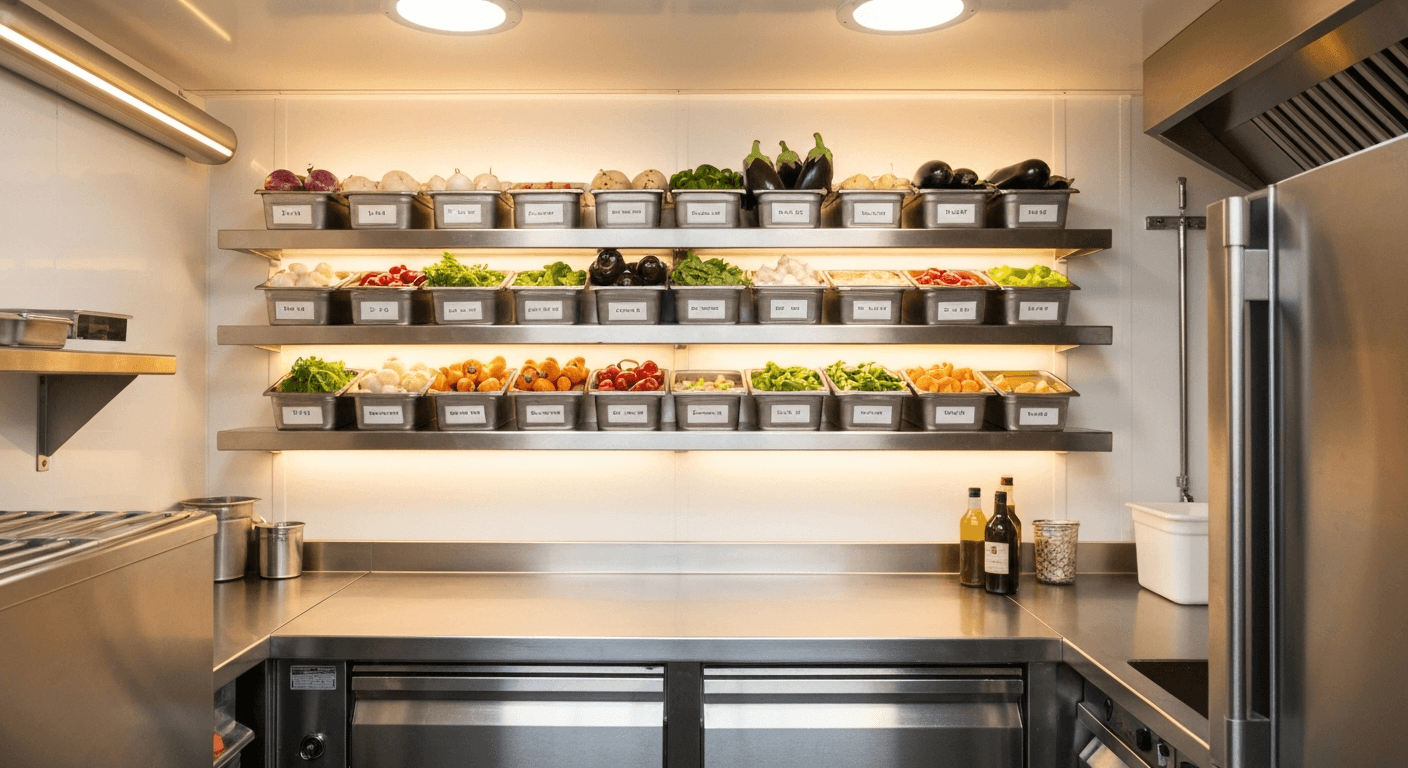
Unsold Stock: The Silent Loss in Your Food Truck
Every evening, after your last service, look at what's left in your truck. Those unsold portions, those prepared ingredients that won't go anywhere, represent money you've already spent — and won't recover.
In a food truck, unsold stock is a daily reality. Unlike a fixed restaurant, you can't easily carry preparations from one day to the next, nor adapt your menu on the fly based on customer flow. The result: losses that silently erode your margins.
According to FoodTracks data, food truckers who don't track their inventory lose an average of 5 to 12% of their monthly revenue in unsold stock and waste. On €8,000 monthly turnover, that's up to €960 thrown away every month.
Why Does Unsold Stock Happen?
Before looking for solutions, it's important to understand the causes. Unsold stock in food trucks generally has four origins:
1. Poor Demand Estimation
You produce "by instinct", based on an approximate estimate of expected customers. Result: some days you over-produce. Some locations generate half the footfall of another, but you've prepared the same quantity.
2. Unanticipated Variability
Weather, a competing event in the city, a market cancelled at the last minute — all factors that brutally reduce customer flow. Without historical data for each location, these variations are impossible to anticipate.
3. Menu Too Wide
A menu with 12 different dishes forces you to prepare ingredients for each option. Every unsold dish takes with it the cost of its specific ingredients, which are often hard to substitute.
4. No Real-Time Tracking
Without a tracking tool, you don't know exactly what you have left during service. You keep offering dishes when ingredients are nearly exhausted — or conversely, you prepare too late portions that won't sell.
5 Concrete Strategies to Reduce Unsold Stock
1. Anticipate with Data Analysis
This is the most effective method: prepare exactly what you'll sell. For that, you need data.
Keep a service log: location, weather, customer count, sales by dish, unsold items. After a few weeks, trends emerge. A given location generates 40 covers on Tuesday morning, 80 on Friday lunchtime. That festival attracts 60% vegetarians.
FoodTracks automates this analysis. By cross-referencing your sales data (via SumUp integration), your locations and the weather, it suggests the quantities to prepare for each service — replacing guesswork with precision.
2. Adapt Your Production During Service
Don't prepare everything at the start of service. Work progressively: start with 60% of your estimated production, then relaunch in small batches based on actual customer flow.
This continuous production technique mechanically reduces end-of-service unsold stock, especially for complex dishes with long preparation times.
3. Activate Flash Promotions at End of Service
When you have 30 minutes left and dishes to clear, social media is your best ally. Post an Instagram story or Facebook post: "Still 8 portions of today's burger — -25% until 2:30pm."
This technique works particularly well if you have an active community of regulars. It generates a final customer peak and saves you from throwing food away.
Tip: set a trigger threshold. For example, if 45 minutes before closing you still have more than 20% of your initial production left, automatically launch a flash promo.
4. Use Anti-Waste Apps
Platforms like Too Good To Go allow food trucks to sell unsold stock as surprise bags at reduced prices (€3–6). The concept:
- You post a listing during service ("surprise bag available at 2pm")
- Nearby customers order via the app
- They pick up the bag at closing time
5. Donate to Charities and Get Tax Benefits
If some unsold stock remains unavoidable, consider food donation. In France, any business that donates food to an approved charity (Restos du Cœur, Banque Alimentaire, Secours Catholique…) benefits from a 60% tax reduction on the value of donations (under corporate philanthropy rules, Article 238 bis of the General Tax Code), up to 0.5% of net revenue.
In practice: if you donate €100 worth of food per month (book value), you recover €60 in tax reduction. Your effective loss drops to €40 instead of €100.
To benefit from this:
- Contact an approved charity in your area
- Request a tax receipt for each donation
- Keep a list of donated products with their book value
Adapting Your Menu to Reduce Risk
Unsold stock management also involves structural decisions about your offering:
Reduce the Number of Dishes
A menu of 5–6 well-mastered dishes is easier to produce precisely than a 12-option menu. Fewer references = less risk of unsold stock per dish.Favour Versatile Ingredients
Choose ingredients that work across multiple dishes. A marinated chicken can go into a wrap, a salad, a bowl. If one dish doesn't sell, its ingredients migrate to others.Create an End-of-Service Special
Identify surplus ingredients during service and offer an unadvertised bonus dish at an attractive price. It also creates a scarcity effect that regulars appreciate.Tracking Unsold Stock with FoodTracks
To act on unsold stock, you first need to measure it. FoodTracks allows you to:
- Log your unsold items after each service (by dish, by ingredient)
- Automatically calculate the value of losses based on your purchase prices
- Identify problematic dishes over time
- Compare your predictions vs reality to refine week after week
Conclusion
Unsold stock in a food truck is not inevitable. With the right methods — data-driven anticipation, flash promotions, anti-waste apps, charitable donation — you can reduce your losses by 50 to 70% within a few weeks.
The first step? Start measuring. You can't improve what you don't measure. Open FoodTracks after your next service, log your unsold items, and let the data guide you towards more profitable management.
Also read: How to Manage Food Truck Inventory Efficiently · Food Truck Cash Flow Management · How to Calculate the Cost Price of a Dish
Frequently Asked Questions
- What should I do with unsold food at the end of a food truck service?
- Several options are available: offer a flash promotion on social media or via an anti-waste app, give unsold items to your team, donate to an approved charity (with tax benefit), or repurpose ingredients into next-day specials if storage allows. The best approach is to anticipate upfront using your past sales data to only prepare what you'll sell.
- How can I reduce unsold stock in my food truck without losing customers?
- The key is to calibrate your production to the expected service, not to your maximum capacity. Analyse your sales by location and time slot to identify your peaks. Adapt your menu to short services (fewer dishes, faster turnover) and use a prediction tool to refine your quantities week after week.
- Are food donations tax-advantageous for a food truck?
- Yes. In France, businesses that donate food to approved charities (Restos du Cœur, Banque Alimentaire, etc.) benefit from a tax reduction equal to 60% of the value of donations, up to 0.5% of net revenue. For a food truck operator, this can amount to several hundred euros recovered per year while reducing losses.
- Which anti-waste app can help a food truck?
- Apps like Too Good To Go allow food trucks to sell unsold stock as surprise bags at reduced prices (typically €3–5). It's a quick solution with no fixed costs that generates additional cash while improving your eco-friendly image. Combine it with a management tool like FoodTracks to anticipate which quantities to list.
- How much do food trucks lose due to unsold stock each month?
- According to FoodTracks user data, losses from unsold stock and waste represent 5–12% of monthly revenue for food trucks that don't track their inventory. On a monthly turnover of €8,000, that equals €400–960 in direct losses per month — up to €11,500 per year.