Why Team Management Is Different in a Food Truck
Managing a food truck team has nothing in common with running a traditional restaurant crew. You work in 2 to 8 square metres, with a small team (usually 1 to 3 people), under constant pressure during the rush. Every team member must be versatile, fast and autonomous.
Yet many food truckers neglect this aspect. The result: high turnover, chaotic services and accumulating fatigue. Managing your team well is just as important as managing your menu.
Recruiting the Right Profiles for a Food Truck
Essential Qualities
In a food truck, technical skills are learned on the job. What really matters:
- Versatility: your team must handle cooking, serving, cash handling and cleaning
- Stress resistance: the lunch rush in a food truck is intense, in a confined space
- Autonomy: impossible to micro-manage when everyone is busy
- Positive attitude: customer contact is constant — a smile makes all the difference
- Punctuality: a 15-minute delay can push back the entire service
Where to Find Candidates
Traditional channels (Indeed, LinkedIn) work, but the best profiles often come from:
- Word of mouth between food truckers — the community is supportive
- Hospitality schools — motivated interns looking for hands-on experience
- Social media — an Instagram or Facebook post showing your truck's atmosphere attracts people who share your values
- Dedicated food truck forums and Facebook groups
Hiring Mistakes to Avoid
- Hiring in a rush: don't take the first candidate because you need someone tomorrow
- Skipping the trial period: a real-world test service is worth more than a long interview
- Ignoring soft skills: an excellent cook who can't handle rush-hour stress will be counterproductive
Organising Work in a Compact Space
Define Clear Roles
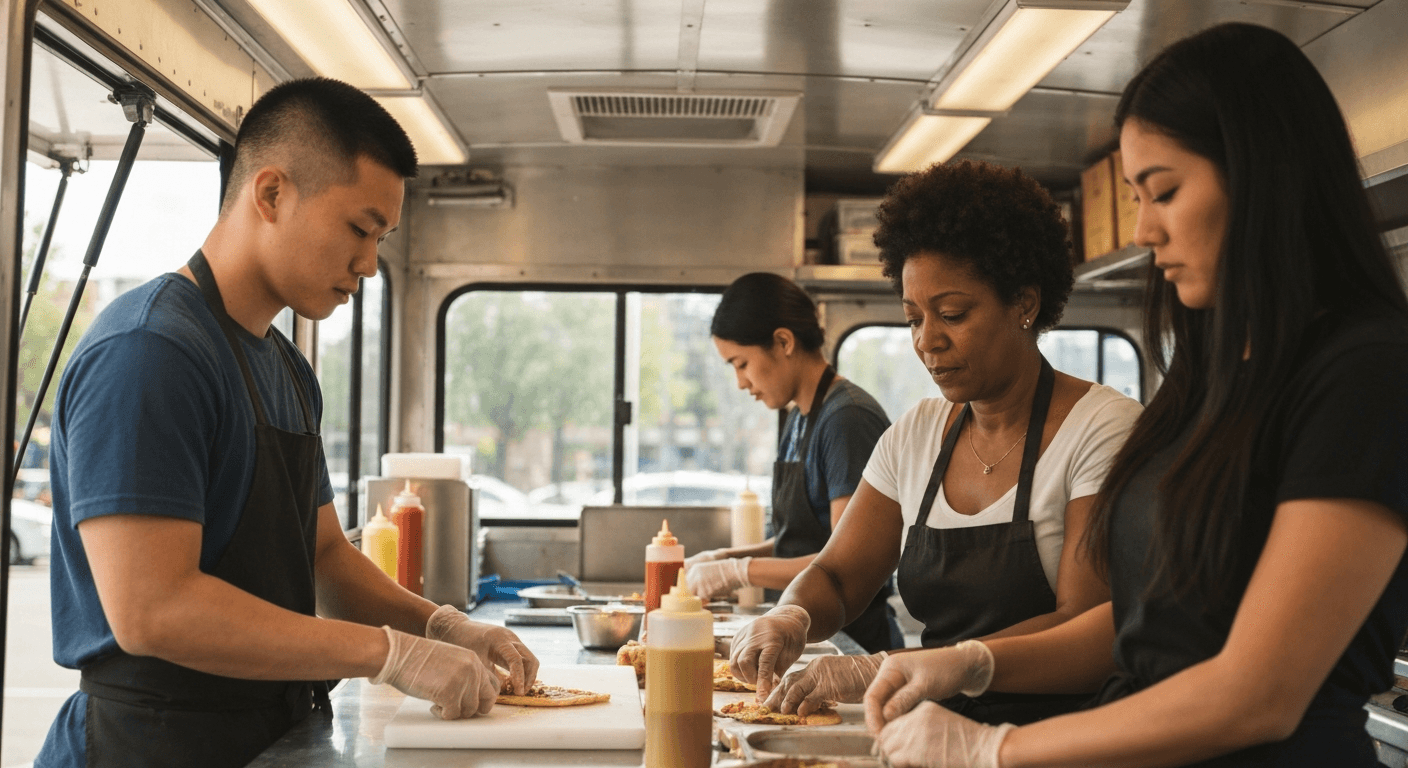
Even with just 2 people, everyone must know exactly what to do:
- Kitchen station: prep, cooking, plating
- Service station: order taking, payment, handing out dishes
- Prep station: mise en place before service, cleaning after
Create Simple Procedures
Document your basic procedures:
- Opening checklist: switch on equipment, check stock, prepare sauces
- Rush protocol: who does what when 15 people are waiting
- Closing checklist: cleaning, tidying, cash count
Optimise Movement
In a food truck, every step counts. Organise your space so that:
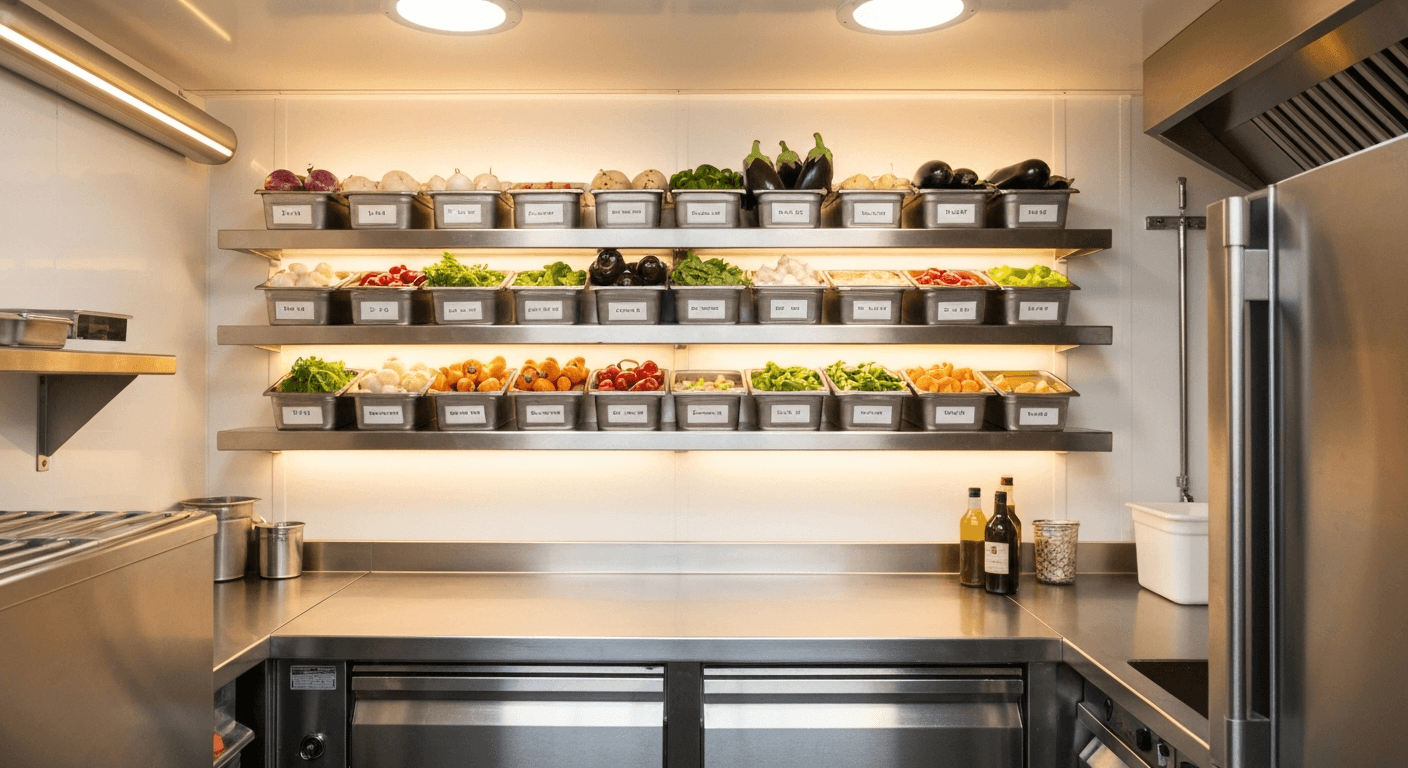
- The most-used ingredients are within arm's reach
- The kitchen-to-service path is smooth (no crossing)
- Every tool has a fixed spot (the famous "a place for everything")
Training Your Team Effectively
On-the-Job Training
Forget 50-page manuals. In a food truck, training happens in real conditions:
- Day 1: observe a full service
- Day 2-3: gradually take over a station under supervision
- Day 4-5: work the station independently, with feedback after service
- Week 2: rotate to other stations
Priority Skills to Teach
- Hygiene and safety: HACCP rules are non-negotiable (see our HACCP food truck guide)
- The menu: every team member must know ingredients, allergens and prices
- Payment handling: using the POS (SumUp, card terminal) without errors
- Complaint handling: how to respond to an unhappy customer
Using Technology to Simplify Training
A tool like FoodTracks simplifies training by centralising everything:
- Recipe cards with exact quantities
- Real-time stock tracking (no more manual counting)
- Sales data that objectively shows performance
Motivating and Retaining Your Team
Turnover: The Food Truck Plague
The hospitality industry has an average turnover rate of 70% per year. In food trucks, it's often worse due to tough conditions: heat in summer, cold in winter, irregular hours, physical work.
Motivation Levers That Work
- Fair pay: pay above minimum wage if you can. A good team member who stays 2 years is worth more than 4 beginners who leave after 3 months
- Performance bonuses: a percentage of revenue above a target motivates everyone
- Autonomy: let your team suggest dish ideas and improvements. Involvement creates engagement
- Atmosphere: in a food truck, you're working shoulder to shoulder. Good team spirit isn't a luxury — it's a necessity
- Recognition: a simple "thanks, that was a great service" goes further than you think
Managing Conflicts in a Confined Space
In 4 square metres, a disagreement can quickly become unbearable. Golden rules:
- Never argue in front of customers — discuss it after service
- Clear roles prevent 80% of friction
- Regular debriefs (5 minutes after each service) help release tension
Legal Aspects Not to Overlook
Contract Types That Fit
- Permanent contract: for your core team — stability matters
- Seasonal fixed-term: perfect for reinforcing the team in high season (April-October)
- Casual/Extra: for one-off events (festivals, weddings)
- Internship: hospitality students, formal agreement required
Legal Obligations
- Pre-hire declaration with the relevant authorities
- Medical check-up upon hiring
- Hygiene training: at least one team member must hold HACCP certification
- Up-to-date staff register
- Labour law compliance: break times, maximum working hours, weekly rest
Scheduling
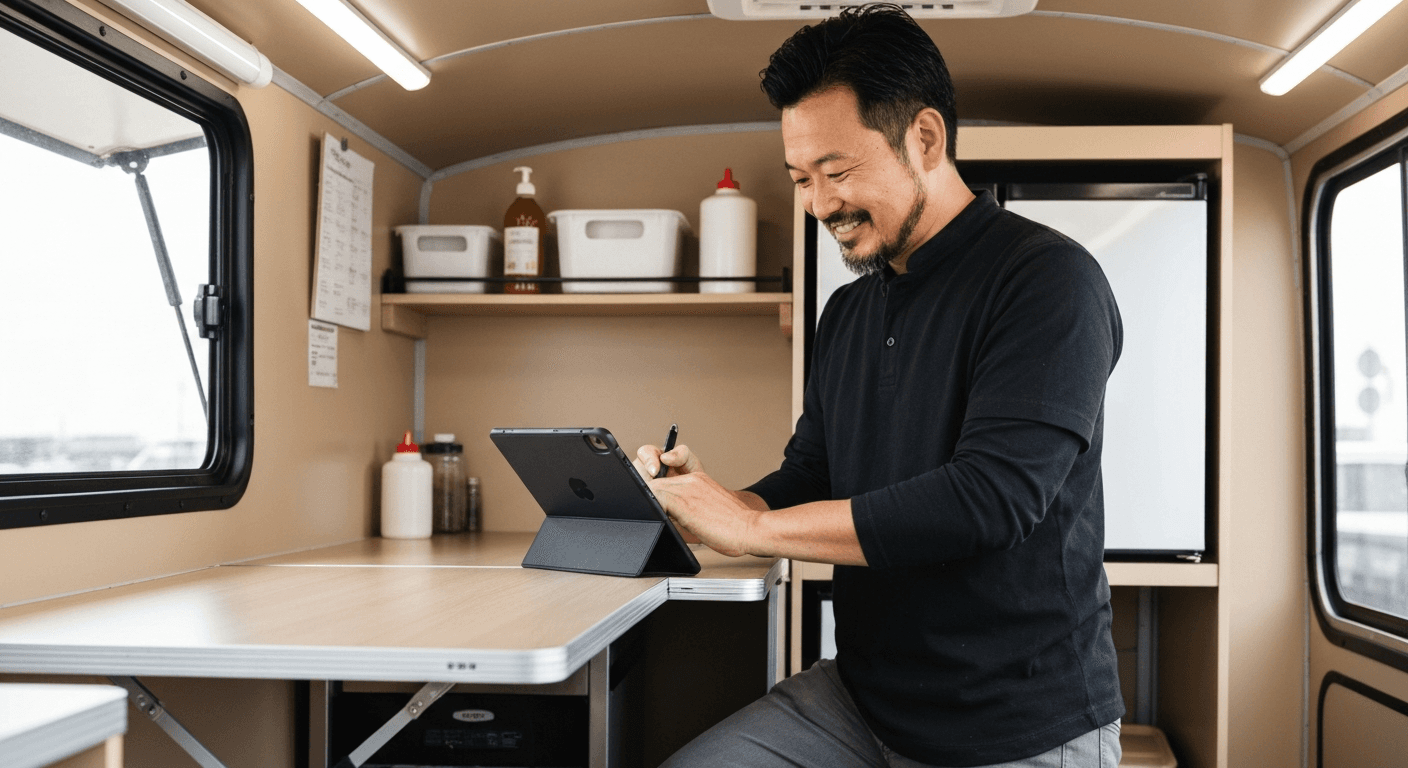
A clear schedule communicated in advance is essential. In food trucks, hours are often irregular (morning market, evening festival). Use a simple tool (even a shared Google Sheet) so everyone knows when they're working.
The Role of Technology in Team Management
Centralise Data for Better Decisions
With FoodTracks, you centralise all your business data:
- Sales per service: identify your busiest services to adapt staffing
- Margins per product: train your team to upsell the most profitable items
- Sales predictions: anticipate covers and adjust your team accordingly
- Stock tracking: your team knows in real time what's left and can adapt recommendations
Measure to Improve
Data doesn't lie. By tracking performance service by service, you can:
- Identify services where the team is understaffed (long service times, complaints)
- Spot activity peaks to plan the right number of people
- Compare performance based on team composition
Conclusion
Managing a food truck team requires specific skills: recruiting the right profiles, organising work in a compact space, training quickly, and motivating daily. It's an investment that pays off in service quality, customer loyalty and peace of mind.
Don't underestimate the human side of your business. The best menu in the world, served by a demotivated team during a disorganised service, is worthless. Conversely, a tight-knit, well-managed team can turn a simple burger into a memorable experience.
Try FoodTracks for free to give your team the tools they need.
Frequently Asked Questions
- How many people do you need to run a food truck?
- Most food trucks operate with 1 to 3 people per service. Solo, you handle everything but it's exhausting. With two, one cooks and the other serves. With three, you can handle a big rush with a prep station for backup.
- How to quickly train a new food truck team member?
- Favour on-the-job training: day 1 observing, days 2-3 gradually taking over, then autonomy. Use simple checklists and a tool like FoodTracks to centralise recipes and stock tracking.
- How to reduce turnover in a food truck?
- Pay above minimum wage, offer performance bonuses, let your team suggest ideas, maintain a good atmosphere, and above all recognise good work. A good team member who stays 2 years is worth more than 4 beginners.