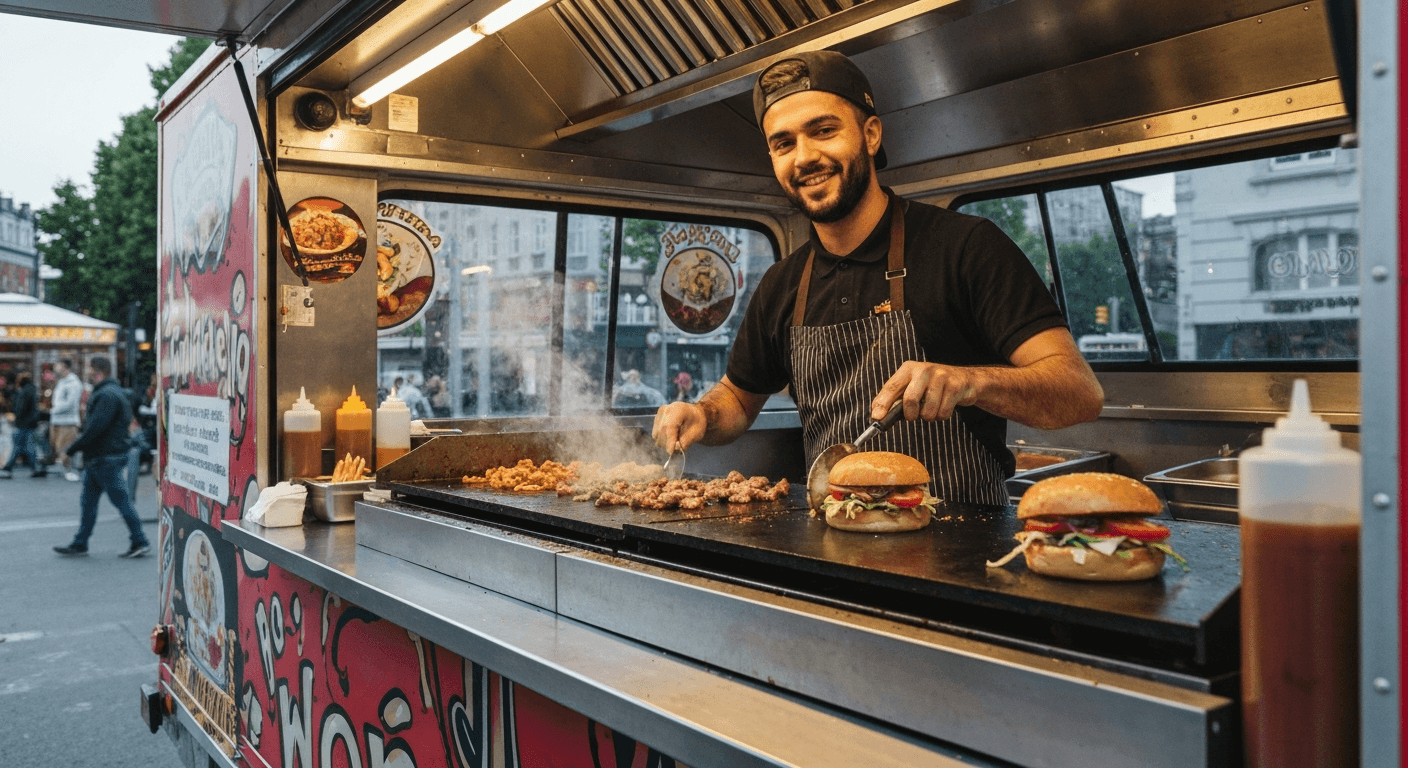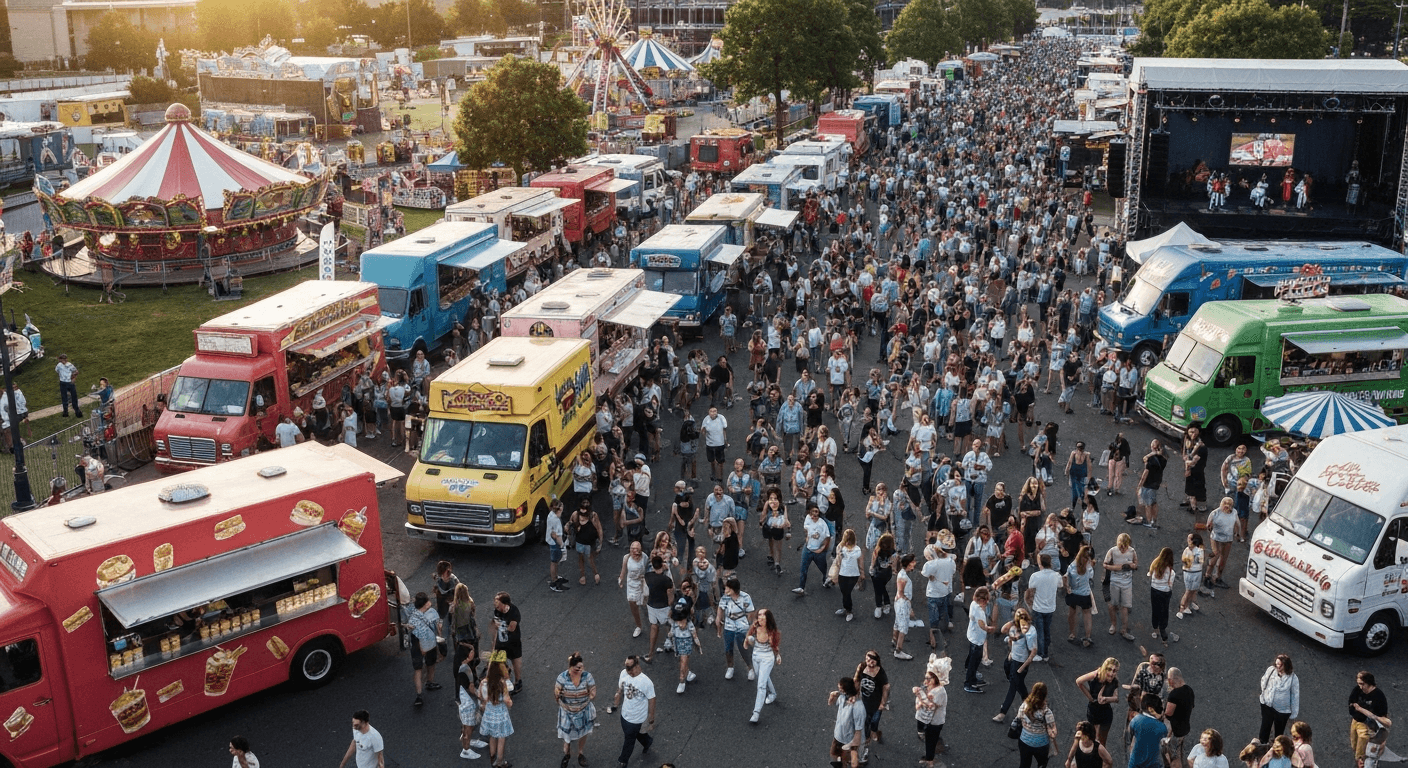
Why Festivals Are Both an Opportunity and a Trap for Food Trucks
A major music festival, a food market or a village fair: these events are the stuff of many food truckers' dreams. Pack a maximum of customers into one location for two or three days, with queues forming naturally. In theory, it is the perfect recipe.
In practice, many food truckers return from a festival exhausted, with wasted stock, wages paid at a loss and disappointing net profits — or an outright loss. The difference between success and failure at a festival comes down to preparation, not luck.
This guide gives you the complete method, from selecting the right festival to analysing the results afterwards.
Step 1: Selecting the Right Festivals
Not all festivals are equal. Before applying, evaluate each event against these 5 criteria.
Attendance and Audience Profile
A 2,000-person festival has different potential from a 20,000-visitor event. But raw attendance is not enough — check:
- The demographic profile (families, young adults, high earners, students?)
- How long attendees stay on site (festival-goers who sleep on site spend 2 to 3 times more)
- The presence of competing food trucks serving the same cuisine type
The Ratio of Pitch Fee to Attendance
Calculate the cost per potential visitor: pitch fee ÷ announced attendance. A ratio below €0.20 per visitor is favourable. Above €0.50, be very cautious.
The Logistics Provided by the Organiser
A good organiser provides:
- A clearly defined and secured pitch
- Access to water and electricity (or clearly tells you in advance that you must be self-sufficient)
- A visible position on the site map
- Information on other food vendors present
The Event's Track Record
A festival in its fifth edition with positive reviews beats a first-time event. Look for feedback from food truckers who have participated — Facebook groups and specialist forums are full of this kind of first-hand experience.
The Fit With Your Concept
Does your food truck concept match the expected audience? A gourmet burger at €14 will land well at an electro-pop music festival but be a tough sell at a rural agricultural fair. A hearty sandwich at €8 can conversely do brilliantly where a premium concept struggles.
Step 2: Calculate Your Break-Even Point Before Committing
This is the step the majority of food truckers skip — and it is often the reason for their disappointment.
Festival Costs to Include
Fixed costs:
- Pitch fee (flat rate or % of revenue)
- Travel and fuel
- Accommodation if the festival is far away (budget €50–€120 per night)
- Supplementary event insurance
- Extra stock (plan a 20% buffer above your forecasts)
- Extra staff wages (additional personnel to handle the pace)
- Consumables (packaging, napkins, gloves — plan generously)
- Wastage losses if you have misjudged demand
The Minimum Revenue Calculation
Formula: Minimum revenue = total festival costs ÷ average gross margin
Concrete example:
- Pitch fee: €900
- Extra stock: €1,400
- 2 extras × 2 days × €80 = €320
- Fuel and travel: €180
- Total festival costs: €2,800
If you estimate 350 covers over 2 days at an average spend of €13 → €4,550 in revenue. You make roughly €430 net for 2 days of intensive work. Is it worth it? That is your call — at least it is an informed one.
Step 3: Prepare the Operation 3 Weeks in Advance
Festival preparation begins well before the day itself. Here is your ideal preparation timeline.
D-21: Confirmations and Bookings
- Confirm your registration with the organiser and obtain the written contract
- Book accommodation if needed
- Plan your extra staffing needs and start recruiting
- Inform your regular suppliers of your festival order (some need advance notice)
D-14: Menu and Stock
- Finalise your festival menu: ideally 4 to 6 items, all fast to execute
- Calculate your stock needs per item for the duration of the festival (use your FoodTracks sales data as a baseline)
- Place supplier orders with a 15–20% safety buffer
- Prepare your festival recipe sheets with pre-production quantities
D-7: Logistics and Equipment
- Check the condition of your equipment (fire extinguisher, refrigeration, generator)
- Prepare your consumables (packaging, napkins, gloves in festival quantities)
- Test your SumUp connectivity on 4G (festival Wi-Fi is often saturated)
- Brief your team on the festival menu, prices and accelerated procedures
D-2: Pre-Production
- Complete as much pre-production as possible: marinades, sauces, vegetable prep
- Verify your stocks with a precise checklist
- Load the truck and check the cold chain
Step 4: Optimise Your Service On Site
Once on site, your goal is simple: serve as many customers as possible, as fast as possible, without compromising quality.
Service Speed: Your Absolute Priority
At a festival, a queue longer than 10 minutes deters potential customers. To speed things up:
- Pre-packaging: open condiments, prepared packaging, garnishes ready to go
- Station division: one hot station, one assembly/plating station, one payment station
- Internal communication: a simple ticket system or kitchen display screen to avoid errors
- Menu at cruising speed: if one item slows the line, consider temporarily suspending it
Real-Time Stock Management
This is where FoodTracks makes the difference. By connecting your SumUp sales live, you know at any moment:
- Which product is selling fastest
- Which ingredients you are running short on
- Your live revenue against your daily target
Managing Queues and the Customer Experience
A well-managed queue is a moving queue. A few tips:
- Clear menu display with photos and prices (reduces decision time at the counter)
- In-queue order taking: an extra staff member taking orders while customers wait significantly speeds up flow
- Proactive communication: announce product run-outs before the customer reaches the counter
Step 5: Close the Festival and Analyse Your Results
The festival ends — the analytical work begins.
Physical Close-Down
- Inventory your remaining stock immediately (before any tidying up)
- Clean and sanitise the truck in accordance with your HACCP procedures
- Note any incidents or problems while they are still fresh
- Collect customer reviews on site if possible (QR code to your Google Business Profile)
Post-Festival Analysis
This is the step most food truckers neglect — yet it is the one that drives improvement.
With your FoodTracks data, analyse:
Commercial performance:
- Total revenue vs target
- Actual average spend vs estimate
- Number of covers per half-day
- Top 3 best-selling items
- Waste rate (stock purchased – stock sold – stock remaining)
- Actual food cost vs projected
- Average service time (if you were able to track it)
- Net profit after all festival costs
- Profitability per hour worked (you and your team)
- Comparison with a regular weekend on your usual pitches
The Return Decision
Based on this analysis, you can decide with real data whether this festival deserves a return next year, and what improvements to make (menu, pricing, staffing, position on site).
The Most Common Mistakes at Festivals
Underestimating Indirect Costs
The pitch fee is visible, but many other costs are not: accelerated equipment wear, team fatigue (and its impact on quality), the time spent on preparation and transport. Factor them all into your calculation.
Keeping Too Large a Menu
A 12-item menu at a festival is a guaranteed recipe for slowing your service, increasing waste and disorganising your team. Choose 4 to 6 signature items and execute them perfectly.
Not Planning a Backup Staff Member
An extra who calls in sick the morning of the festival is a disaster. Always have an emergency contact — a food trucker friend, a catering student — you can call at short notice.
Ignoring Site Access Logistics
Some festivals have strict rules on vehicle access and exit times. Arrive the evening before if possible to locate your pitch, test your electrical connection and organise your truck under real conditions.
How FoodTracks Supports You at Festivals
FoodTracks is built for food truckers on the move. During a festival:
- Live sales tracking via SumUp: you know your revenue to the minute
- Stock alerts: FoodTracks calculates your theoretical consumption and alerts you as you approach a stockout
- Automatic end-of-service report: at closing time you have a complete revenue/food cost/margin summary
- Supplier ordering: place your D+1 resupply order from your phone at the end of the evening
Also read: Food Truck Catering and Events · Finding the Best Pitches · Optimising Your Margins
Frequently Asked Questions
- How much does it cost to participate in a festival with a food truck?
- Pitch fees at festivals vary widely: from around €150 for a small local fair to €1,500–€3,000 for a major music or food festival. Some organisers take a percentage of revenue (8–15%) instead of or on top of a fixed fee. Before signing up, calculate the minimum turnover you need to cover the fee, extra stock, staff and fuel. As a rule of thumb, a festival only becomes profitable from around €2,000–€2,500 in daily revenue.
- What menu should a food truck offer at a festival?
- At a festival, the golden rule is to trim your menu to your 4 to 6 best-selling, fastest-to-prepare items. Avoid made-to-order dishes that block the line. Favour formats easy to eat standing up (burgers, tacos, bowls, wraps). Pre-prepare as many components as possible (sauces, toppings, marinated proteins). A short menu improves service speed, reduces waste and simplifies supplier orders — all critical when handling 300 to 500 covers a day.
- Are specific permits required to sell at a festival?
- Yes. On top of your usual licences (operator's permit, professional card, DDPP declaration), you will generally need written agreement from the festival organiser and an insurance certificate covering the event. Some festivals also require a vehicle compliance certificate (current MOT, checked extinguisher) and a presence declaration with the local authority if the event is on public land. Check these points at least 3 weeks before the festival.
- How do you manage stock for a multi-day festival?
- For a 2–3 day festival, stock management is critical. Order for D+1 each evening based on actual sales from the day, not just your initial forecasts. Plan a 20% buffer for non-perishable products. For fresh items, arrange a supplier delivery each morning or identify a resupply point within 30 minutes. With FoodTracks, you can track consumption in real time and place orders from your phone between services — essential when you are on site all day.
- How do you calculate whether a festival will be profitable before you go?
- Use this simple formula: minimum revenue = (pitch fee + extra stock + extra wages + fuel + truck wear allowance) ÷ average gross margin. For example: €800 pitch fee + €1,200 stock + €600 extra staff + €150 fuel = €2,750 in festival fixed costs. At a 65% gross margin, you need at least €4,230 in revenue to break even. If the event draws 5,000 visitors over 2 days and your average spend is €12, targeting 400 covers (€4,800 revenue) is realistic. Below that, skip it.