Why Private Events Are a Gold Mine for Food Truckers
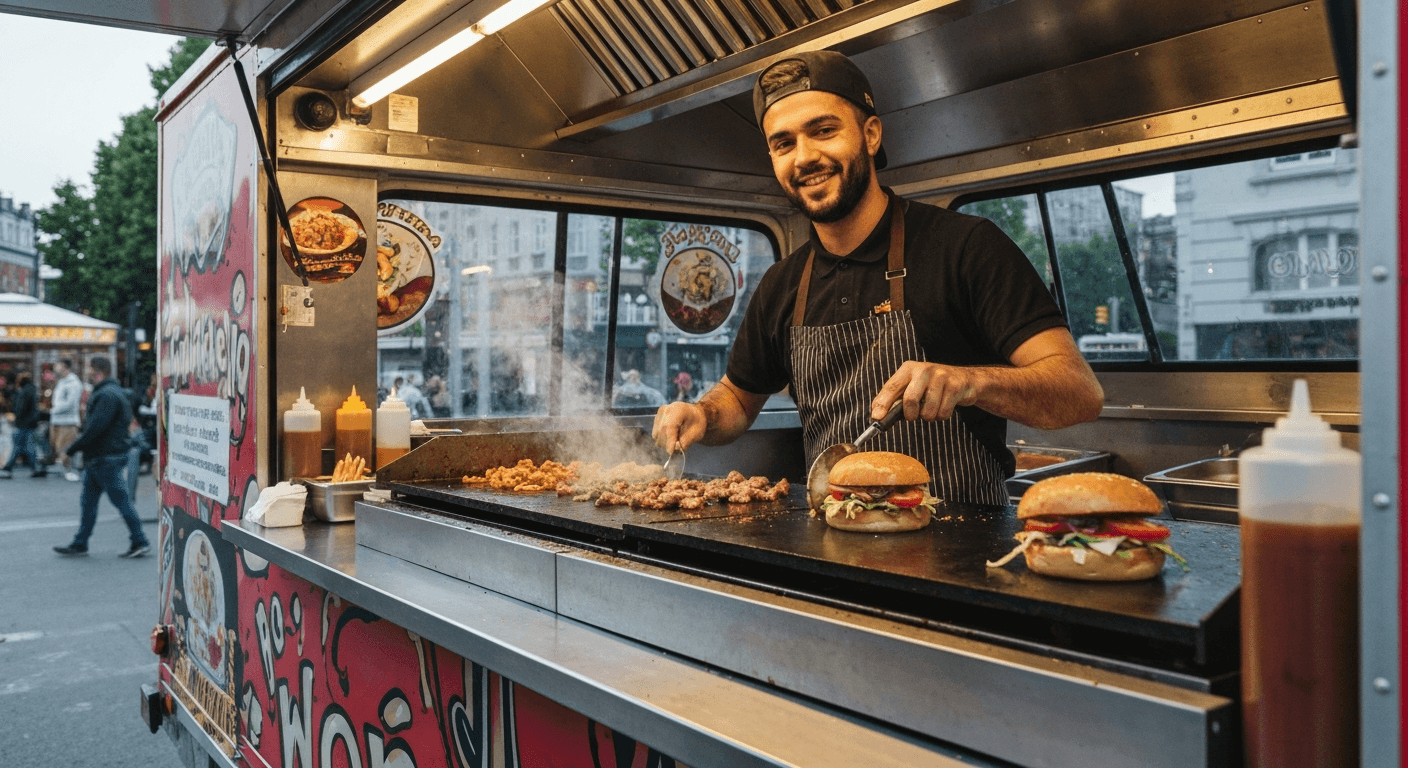
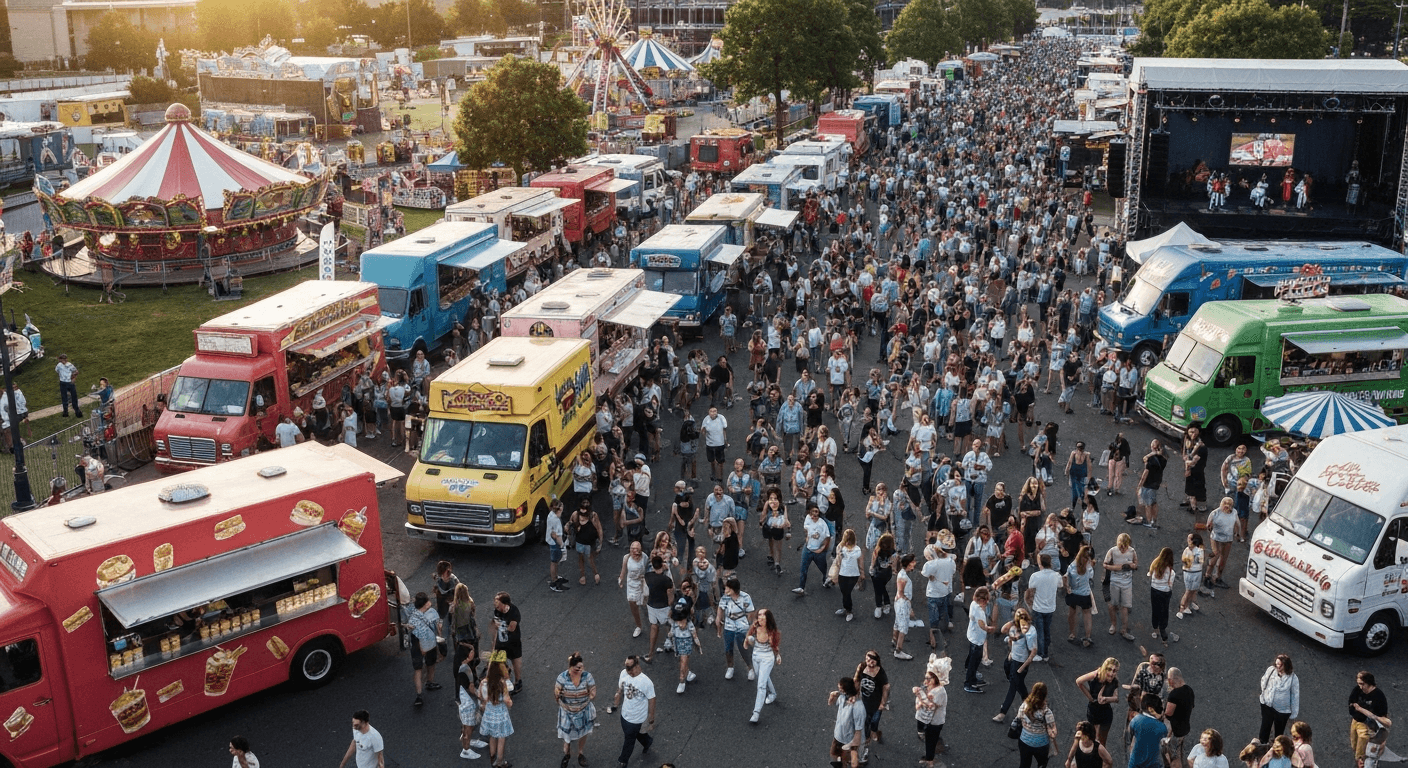
A 120-person wedding. An 80-employee corporate seminar. A product launch party. These three types of events share one thing in common: they're all looking for an original dining experience, and the food truck ticks every box — convivial, photogenic, flexible, and far cheaper than a traditional caterer.
For you, as a food trucker, the logic is simple: a single contract can be worth the equivalent of a week of market trading. A 4-hour service for 100 guests at a €2,500 guaranteed minimum represents an average of 4 to 6 days of revenue compressed into a few hours.
But landing these contracts doesn't happen by chance. Here's how to structure your events business from A to Z.
The Three Main Categories of Private Events
1. Weddings
This is the most profitable and most competitive segment. Couples are looking for something original — a gourmet burger bar late in the evening after the sit-down dinner, a food truck brunch the following morning, or even the main meal for a rustic outdoor wedding.Key points:
- Far in advance booking: 6 to 18 months ahead
- Decision-makers: the couple themselves, their wedding planner, or the venue
- High average spend: couples are willing to pay more for something unique
- High expectations on the truck's aesthetics (the look must match the theme)
2. Corporate Events
Seminars, team buildings, product launches, end-of-year parties — companies organise on average 3 to 8 events per year and look for reliable suppliers who simplify logistics.Key points:
- Decision often made by an executive assistant or HR manager
- Corporate budget = less price negotiation, but strict invoicing requirements (VAT, purchase order)
- Slots often on weekdays (no competition with weekend markets)
- High repeat value: a successful seminar can generate 3 or 4 additional contracts through internal word of mouth
3. Family and Community Events
Birthdays, communions, neighbourhood fêtes, open days — a more fragmented segment, but useful for getting started and filling the calendar.Setting Your Rates: The Fixed Fee + Variable Method
The biggest mistake food truckers make when starting out in events is offering only a per-head rate. That model is risky: if 30 out of 100 guests don't order, you lose money.
The recommended pricing structure has two parts:
1. The Guaranteed Minimum (Base Fee) This is your safety net. It covers your fixed costs: travel, set-up, labour, and non-negotiable stock. Calculate it like this:
- Cost price of the service (ingredients + wages + fuel + truck wear) × 1.5
- Add an event margin of 20–30%
2. The Variable Component Beyond the minimum, every dish or drink sold generates additional turnover. Agree in advance whether billing is:
- Based on actual consumption (ticketing or counting) — the most accurate
- A flat per-head rate (e.g. €25/person for a full menu) — the easiest to sell
Landing Your First Contracts: The Prospecting Circuit
Wedding Planners and Venues
Identify the 10–20 estates, châteaux, and reception halls in your catchment area. Reach out by email with:- 3 quality photos of your truck in an event setting
- Your event menu (different from your market menu — shorter, more premium)
- Your rates as a range (no custom quote at this stage)
LinkedIn and Works Councils
For corporate events, LinkedIn is your best tool. Target:- Executive assistants within a 50 km radius
- HR managers and office managers
- B2B event agencies
Matchmaking Platforms
Platforms like Mariages.net, Zankyou (for weddings), or B2B event supplier directories let you be found without active prospecting. Create a complete profile with photos, indicative pricing, and client reviews.On-the-Day Logistics: The Critical Points
The Pre-Event Technical Brief
Before any contract is signed, get answers to these 5 questions:- Access: ceiling height, ground surface (grass? gravel?), distance from entrance
- Electricity: 32A outlet available on-site or do you need a generator?
- Water: accessible tap or is your onboard tank sufficient?
- Timings: arrival/set-up time, service start and end, until what time is breakdown permitted?
- Allergens: list of guests with dietary requirements (vegetarians, gluten-free, severe allergies)
The Event Menu
For an event, less is more. A menu of 4 to 5 items max lets you:- Prepare efficient mise en place
- Serve quickly (queuing is the enemy of satisfaction)
- Limit waste
- Maintain consistent quality
Stock Management
Order based on the confirmed guest count + 15%. Favour products whose prep times you know inside out. Always have a 'plan B' in case of a stockout (a quick substitution you can source at short notice).Tracking Event Profitability with FoodTracks
After each privatisation, log in FoodTracks:
- Actual revenue vs the guaranteed minimum (did you exceed the flat fee?)
- Food cost for the service (ingredients-to-revenue ratio)
- Total time (set-up + service + clean-up) to calculate your true hourly rate
- Event type (wedding, corporate, other) to identify your most profitable segments
Key Takeaways
Private events are a significant revenue opportunity for any organised food trucker. With the right pricing structure, a targeted prospecting circuit, and rigorous logistics, you can make this channel 20–40% of your annual revenue — while filling weekday slots that don't cannibalise your markets.
The key: start prospecting now. 2027 weddings are being booked from autumn 2026.
Frequently Asked Questions
- What is the average rate to privatise a food truck for an event?
- Rates vary depending on service duration, guest count, and formula. Generally, expect a guaranteed minimum of €600–€1,200 for a 3-hour service for up to 50 guests, and €1,500–€3,500 for 100–200 people. Some food trucks offer an 'open' format where the organiser pays only a pitch fee and guests pay directly — suited to large events with guaranteed footfall.
- Do I need specific insurance to cater at private events?
- Your professional liability insurance generally covers private events, but check that your policy explicitly includes 'off-site catering service'. Some wedding planners and companies require a certificate of insurance before signing the contract. If you regularly serve alcohol (private bar), an additional endorsement may be needed. Ask your insurer for a bespoke certificate naming the event if the organiser requires it.
- How do I find my first private event clients?
- The best sources for private event leads are: (1) wedding planners and traditional caterers looking for original alternatives, (2) specialist platforms such as Mariages.net, Zankyou, or similar wedding sites, (3) works councils and executive assistants for seminars, and (4) your own market network — ask regular customers if they organise events. An updated Google Business profile mentioning 'event catering' also improves your local visibility.
- What should a food truck catering contract for a private event include?
- A solid contract should specify: the exact date, venue, and service times; the estimated guest count and guaranteed minimum; the agreed menu with allergen management; access conditions (height clearance, electrical connection or generator, running water); cancellation terms and deposit amount (typically 30–50%); and final payment terms. Use a template signed by both parties and keep a digital copy.
- How do I manage stock and orders for an event when the guest count is uncertain?
- Always start from the confirmed headcount + 15% safety margin. Negotiate with your supplier for a J-1 delivery and the possibility of returning unopened goods. Prepare a deliberately short menu (3–5 items max) to limit waste: variety slows service and increases spoilage. Use FoodTracks to compare your forecasts vs actuals after the event and refine your ratios for future privatisations.