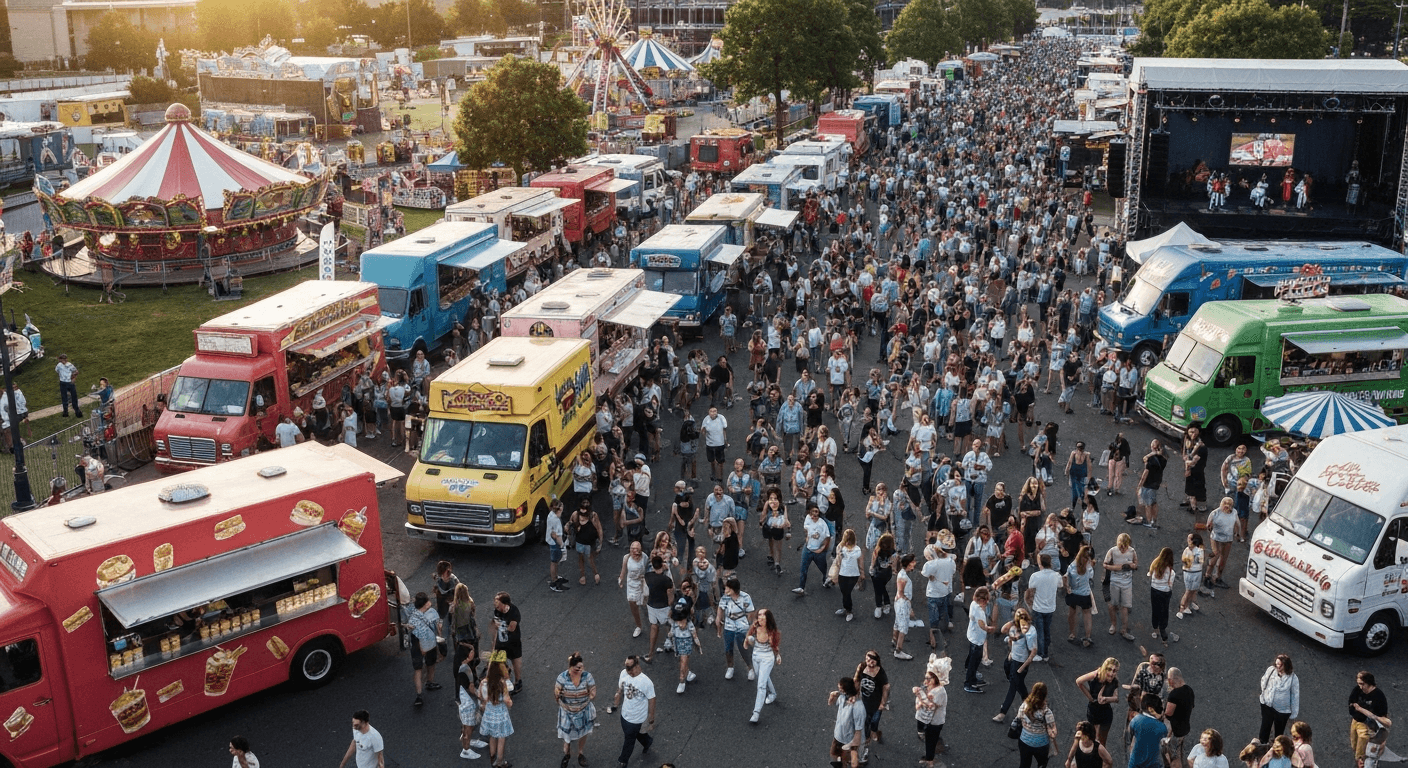
Why a Business Plan Is Essential for Launching a Food Truck
You have the idea, the signature recipe and the drive to hit the road. But without a business plan, you are driving blind. 72% of food trucks that close within their first two years had no structured financial forecast according to industry data.
A food truck business plan is not a bureaucratic document reserved for bankers. It is your entrepreneurial GPS: it forces you to quantify your assumptions, anticipate obstacles and prove — with hard numbers — that your concept is viable.
Whether you are seeking a bank loan, a regional grant or simply validating your project before investing your savings, this guide walks you through it step by step.
The 7 Essential Sections of a Food Truck Business Plan
1. The Executive Summary
This is the first page your banker will read — and often the only one if they are not convinced. Summarise in one page maximum:
- Your concept: cuisine type, positioning, target customers
- The market: size, trends, identified opportunity
- The business model: average ticket, services per week, projected revenue
- Funding needs: amount requested and intended use
- The team: your background and key skills
2. Local Market Research
Do not rely on national statistics alone. Your market is a 30 km radius around your target locations. Analyse:
- Demand: foot traffic, nearby offices, local events, eating habits
- Competition: how many food trucks and restaurants in your zone? What are their prices, menus, hours?
- Trends: healthy food, Asian street food, bowls, local produce — what is growing in your area?
3. Commercial and Marketing Strategy
Describe concretely how you will attract and retain customers:
- Price positioning: budget, mid-range or premium?
- Acquisition channels: social media, local partnerships, delivery platforms, events
- Retention: loyalty cards, regular offers, newsletter
- Digital presence: Instagram, Google My Business, website
4. Three-Year Financial Forecast
This is the heart of your business plan. Bankers look here first. Prepare:
Projected Income Statement:
| Item | Year 1 | Year 2 | Year 3 | |------|--------|--------|--------| | Revenue | €85,000 | €110,000 | €130,000 | | Food costs (30%) | €25,500 | €33,000 | €39,000 | | Fixed costs (rent, insurance, leasing) | €18,000 | €18,500 | €19,000 | | Variable costs (fuel, packaging) | €8,500 | €10,000 | €11,000 | | Wages and social charges | €24,000 | €32,000 | €38,000 | | Net profit | €9,000 | €16,500 | €23,000 |
These figures are indicative. Adapt them to your local reality. The food cost ratio should stay between 25% and 35% of revenue.
Monthly Cash Flow Plan: essential to show you can pay your costs even in slow months (January, February). Plan a working capital buffer of at least 3 months of fixed costs.
Initial Funding Plan: list all start-up investments:
- Vehicle (new or used): €30,000 to €80,000
- Kitchen fit-out: €10,000 to €25,000
- Kitchen equipment: €3,000 to €8,000
- Initial stock: €1,500 to €3,000
- Administrative fees (registration, insurance, food safety training): €2,000 to €4,000
- Start-up cash reserve: €5,000 to €10,000
5. Legal Structure and Regulatory Requirements
Present your chosen legal structure and justify it:
- Sole trader (micro-entreprise): simple but capped at €188,700 revenue (2026) — suitable for testing the concept
- Single-person limited company (EURL/SASU): personal asset protection, more credible with banks
- Partnership (SARL): if you are launching with a partner
6. Risk Analysis and Contingency Plan
Funders appreciate a clear-eyed entrepreneur. Identify your risks and mitigations:
- Weather risk: plan covered pitches and a delivery strategy
- Vehicle breakdown: build an emergency fund (€2,000 to €5,000)
- Increased competition: differentiate through quality, service and digital presence
- Seasonality: diversify income (events, catering, workshops)
7. Appendices
Attach all documents that strengthen your credibility:
- CV and qualifications (especially if you have catering training)
- HACCP training certificate
- Vehicle and fit-out quotes
- Letters of intent from local authorities or pitch managers
- Concept photos or menu prototypes
The 5 Mistakes That Sink a Food Truck Business Plan
- Overestimating revenue: base your projections on 15 to 20 covers per service at launch, not 50
- Forgetting seasonality: your revenue from December to February can drop by 40%
- Neglecting working capital: in the first weeks, you spend without earning at full capacity
- Copying a template without adapting it: a generic model will convince no one
- Ignoring fieldwork: numbers without direct observation are worthless
How FoodTracks Helps You Build a Reliable Forecast
It is hard to build a forecast without data. That is where FoodTracks comes in:
- Real-time sales tracking connected to your SumUp terminal: you get your actual numbers, not estimates
- Cost analysis per recipe: calculate your gross margin dish by dish to refine your forecast
- History by location: identify your most profitable pitches and project revenue based on your schedule
- Stock management: reduce waste and control your food cost ratio
Try FoodTracks for free and turn your assumptions into actionable data.
Frequently Asked Questions
- How much does it cost to create a food truck business plan?
- You can write your business plan for free by following this guide. If you want to hire an accountant or specialist consultant, expect to pay between €500 and €2,000 depending on the level of detail. Chambers of Commerce (CCI) and BGE also offer free or low-cost support for business creators.
- What revenue should you forecast for a food truck in the first year?
- A solo food truck typically generates between €60,000 and €120,000 in revenue in the first year in France, depending on location, cuisine type and services per week. For a conservative forecast, start with 15 to 20 covers per service at an average ticket of €10 to €12, over 5 services per week. Then adjust with your real data using a tool like FoodTracks.
- Do you need a business plan to open a food truck without a loan?
- Yes, even if you are self-funding your food truck, a business plan is still essential. It forces you to structure your thinking, validate your project's viability and anticipate challenges. Without a forecast, you risk discovering too late that your margins are insufficient or that your cash flow cannot survive the off-season. It is a tool for you, not just for banks.