Why So Many Food Trucks Struggle to Be Profitable
Launching a food truck is exciting. You have your concept, your truck, your recipes. For the first few months, adrenaline makes you forget the numbers. Then reality catches up: bills pile in, cash flow tightens, and you start wondering if it's all really worth it.
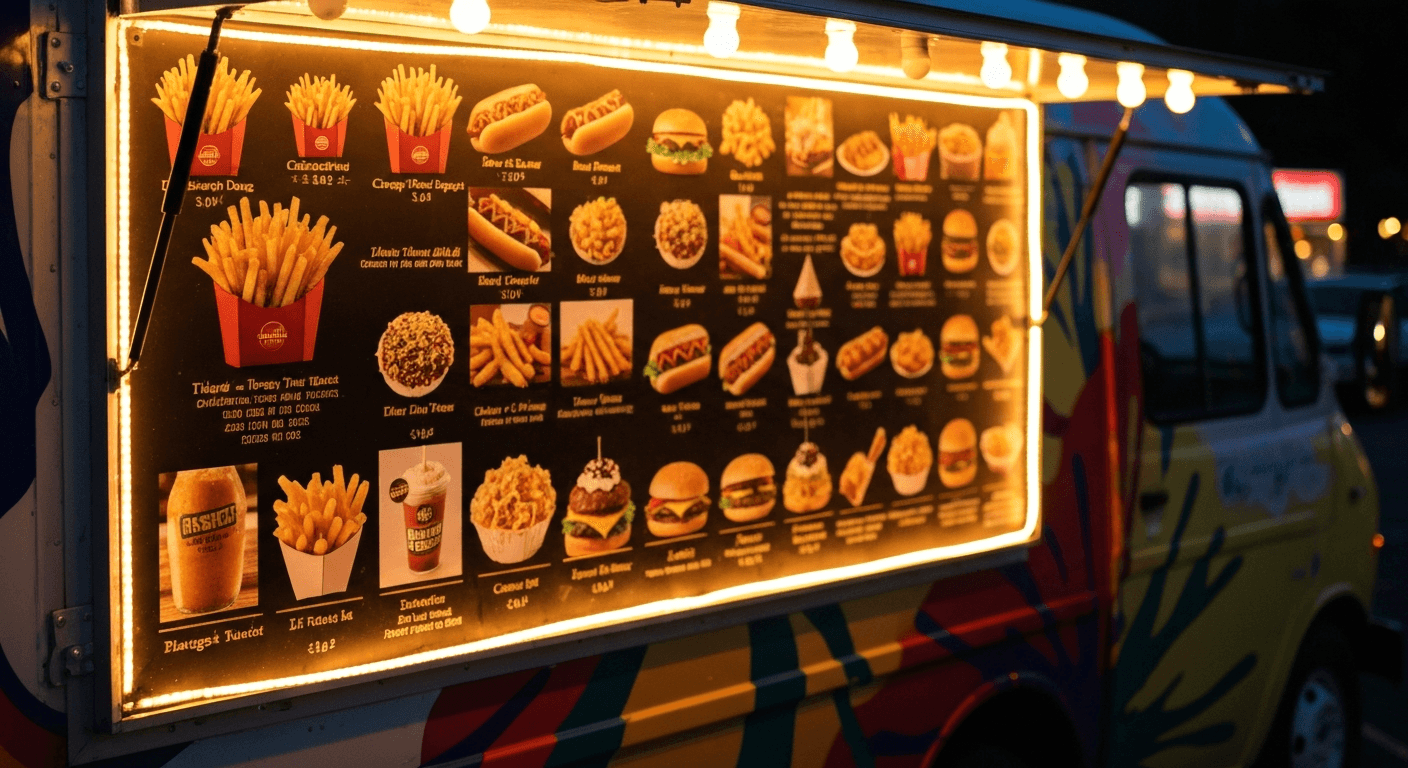
The good news? In the vast majority of cases, the problem isn't the concept or the food. It's management mistakes that nearly every food truck owner makes early on. Silent mistakes that chip away at your margins day after day, without you even noticing.
Here are the 5 most common mistakes, and more importantly, how to fix them.
Mistake #1: Not Knowing Your True Food Cost
This is the most widespread and expensive mistake. Many food truckers set their prices "by feel," baséd on what competitors charge or a rough estimate of ingredient costs.
The problem is that the real food cost is often 20 to 40% higher than what you imagine. Why? Because people forget to count:
- Sauces and condiments (ketchup, mayo, napkins, containers)
- Cutting and préparation losses
- Products thrown away at end of service
- Price variations from suppliers
How to Fix It
Create a recipe card for every dish. List all ingredients, even the smallest ones, with their exact cost per gram or per liter. Include a 10 to 15% loss coefficient for fresh products.
Your food cost should represent between 25% and 35% of the selling price. If you're above 35%, you're losing money on every sale.
With FoodTracks, food cost calculation is automatic. You scan your supplier invoices, enter your recipes, and the tool calculates your real margin on every dish. No more Excel spreadsheets.
Mistake #2: Offering Too Many Menu Items
It's tempting to have a varied menu to please everyone. But in a food truck, every additional dish has a hidden cost:
- More raw materials to store (and therefore more potential waste)
- More préparation time
- More complexity during rush hour
- More risk of running out of specific ingredients
How to Fix It
Analyze your sales over the past 3 months. Identify the dishes that account for 80% of your revenue. These are your best-sellers. The rest? Ask yourself honestly: do they justify the storage space, prep time, and waste they generate?
The ideal setup is:
- 4 to 6 main dishes (including 1 or 2 végétarian options)
- 2 to 3 sides
- 2 to 3 drinks
- 1 optional dessert
With SumUp sales tracking integrated into FoodTracks, you can see at a glance which dishes perform well and which ones drag down your margins.
Mistake #3: Poorly Managing Your Locations
Not all spots are created equal, and yet many food truckers stick to unprofitable locations out of habit or fear of losing their spot.
A good location is one where the ratio between revenue generated and costs incurred (travel, pitch fee, time) is positive. A market where you make EUR300 in revenue for 4 hours of work + EUR50 in pitch fees + EUR30 in gas gives you net revenue of EUR220. If your food cost is at 35%, you have EUR143 left to cover your fixed costs, your salary, and your social contributions. That's very tight.
How to Fix It
Keep a dashboard for each location. For each spot, record:
- Revenue generated
- Pitch cost
- Travel cost (fuel + time)
- Number of services
- Weather conditions
FoodTracks does this tracking automatically. By connecting your SumUp terminal, every sale is geolocated and linked to a location. You can instantly see which spots are goldmines and which ones are money pits.
Mistake #4: Ignoring Food Waste
Waste is money going straight into the bin. Literally. And in a food truck, it takes several forms:
- Expired products: you over-ordered and it ends up in the trash
- Oversized portions: every extra 10g of meat, multiplied by 100 portions, is 1kg of free raw material
- Poor storage: the cold chain in a truck is fragile
- Over-préparation: you prep for 80 covers and serve 50
How to Fix It
Weigh everything for one week. Yes, it's tedious, but it's eye-opening. Weigh what you throw out at the end of service, what expires in your fridges, what's left in prep containers.
Then act on 3 levers:
- Adjust your orders baséd on your actual sales history (not what you hope to sell)
- Standardize your portions with calibrated ladles, spoons, and containers
- Monitor your expiration dates and adapt your menu to use products nearing their use-by date
Mistake #5: Not Tracking Your Numbers (or Tracking Them Too Late)
This is the mother of all mistakes. Many food truckers only look at their numbers once a month, or even once a quarter, when the accountant sends the balance sheet. By that point, it's too late to react.
If you discover in April that your margin dropped in February, you've lost 2 months of optimizable revenue.
How to Fix It
Track 4 key metrics every week:
- Revenue per service: how much you make per hour worked
- Food cost percentage: the weight of your ingredients in your revenue
- Average ticket: how much each customer spends on average
- Cover count: how many customers you serve per service
FoodTracks centralises all these metrics in a mobile-friendly dashboard. You see your margins in real time, not 3 months later.
The 30-Day Action Plan
You can't fix everything at once. Here's a progressive plan:
Week 1: The Diagnosis
- List all your dishes and calculate the real food cost for each one
- Note the revenue for each location over the last 2 months
- Weigh your food waste for 5 services
Week 2: The Cleanup
- Remove dishes with food costs above 40%
- Identify your 2 least profitable locations
- Standardize your portions with measuring tools
Week 3: The Optimization
- Adjust your prices to target 28-32% food cost
- Test 1 or 2 new locations to replace the least profitable ones
- Set up weekly tracking of your 4 key metrics
Week 4: The Automation
- Set up FoodTracks for invoice scanning and SumUp tracking
- Enter your recipe cards into the tool
- Schedule a 15-minute numbers review every Monday morning
What This Actually Changes
Food truckers who fix these 5 mistakes typically see:
- A margin increase of 8 to 15 points within 2 to 3 months
- A waste réduction of 30 to 50% from the very first month
- A time savings of 3 to 5 hours per week on administrative tasks
- Better cash flow thanks to optimized ordering
Conclusion
A food truck's profitability doesn't just dépend on the quality of your food or the number of customers. It dépends above all on your ability to control your costs, optimize your opérations, and make décisions baséd on real data.
These 5 mistakes are fixable. You just need to start. And if you want to move faster, FoodTracks is here to help -- free, no commitment required.
Frequently Asked Questions
- What is the ideal food cost for a food truck?
- The ideal food cost is between 25% and 35% of the selling price. Above 35%, you're losing money on every dish sold. Create recipe cards for each dish to calculate your real cost.
- How many dishes should a food truck offer?
- Between 4 and 7 main dishes. The most profitable food trucks keep a limited menu to reduce waste, cut prep time, and simplify inventory management.
- How to know if a food truck location is profitable?
- Keep a dashboard for each location tracking revenue, pitch fees, travel costs, and weather. After 2 months of tracking, replace spots below your breakeven threshold.
- What metrics should you track to improve food truck profitability?
- Track 4 metrics weekly: revenue per service, food cost percentage, average ticket, and cover count. FoodTracks centralises this data in real time.